Store camping chairs for winter only after the fabric, frame and carry bag are clean and completely dry. Choose a protected storage location appropriate for the actual materials, keep the folded package from being crushed, and leave a clear record of any damage. A bag is useful for organizing dry equipment; it is not a way to make a damp chair ready for several months of storage.
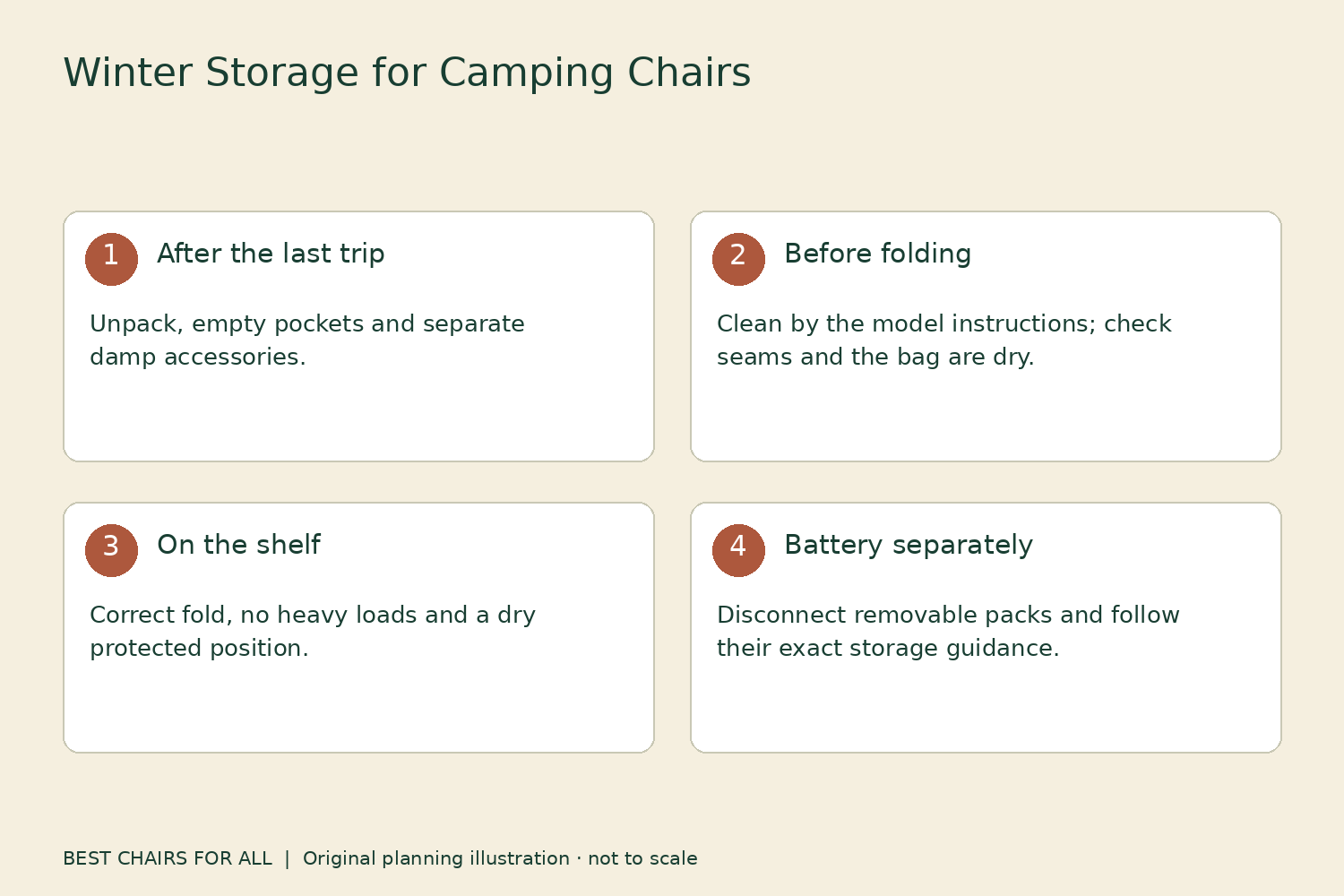
The main risks are often created before the chair reaches the shelf: folding it wet after the final trip, trapping beach contamination in joints, or packing away a small tear that becomes next season’s surprise. Treat winter storage as a short handover process. The care plan below separates arrival, cleaning, drying, repair decisions and final storage so that each step has a clear finish point.
Read the chair’s care instructions first
Look for instructions attached to the chair or supplied by the manufacturer. Identify the actual seat fabric, coating, frame and moving parts. A steel folding rocker, an aluminum pole-frame chair and a heated chair need different attention. Do not apply a patio-furniture winter rule to portable camping gear simply because both are used outdoors.
GCI Outdoor’s support center says its chairs are not made from weatherproof materials, should dry fully before folding and storage, and should be kept indoors when not in use. That is useful evidence that “outdoor chair” does not mean permanent outdoor storage. Other brands may give different care details; use the instructions matching your equipment.
If the original manual is missing, photograph the model label and contact support before using a strong cleaner or lubricant. Save the downloaded manual in a folder named for the exact chair. Include a note about any aftermarket accessory, because an enlarged foot, ground sheet or add-on pad may have its own cleaning and storage requirements.
Unpack the final trip promptly
Open the chair and remove the bag as soon as practical after arriving home. Separate a damp ground sheet and any loose seat pad. Empty cup holders and storage pockets completely. Food crumbs, sticky drink residue and wet tissues can remain hidden when the chair is folded, and they make a poor starting point for long storage.
Place wet equipment where it can dry under the manufacturer’s permitted conditions without obstructing a household route. Keep it away from direct heaters, flames and surfaces that its feet could mark. A garage is not automatically a drying area if air is still and moisture is high. Assess the actual location rather than assuming being under a roof solves the problem.
If you must transport a wet chair in a protective bag, treat that as temporary containment for the journey. Add an unpacking reminder to the trip checklist. Do not let the temporary bag become the winter storage arrangement. A closed container can conceal dampness for a long time, especially when the outside of the fabric feels dry before its folds and seams do.
Remove contamination without over-cleaning
Brush off loose debris only with a tool suitable for the material. Avoid dragging grit across coated poles or scrubbing mesh with a stiff brush. Check the manufacturer’s cleaning method before wetting the entire seat. Some chairs permit a mild soap solution; others specify spot cleaning. The aim is to remove the actual soil with the least aggressive approved method.
The Helinox FAQ recommends spot cleaning with water and a soft cloth or tissue for its products. Follow that guidance for the relevant Helinox chair rather than assuming its removable-looking seat can go into a washing machine. A detachable fabric component is not automatically machine washable, and coatings, seams and reinforcement patches can have different tolerances.
Beach equipment deserves particular attention. GCI directs users to wash its products with fresh water after beach use and dry before storage. Rinse or clean other brands only as instructed. Look for sand around hinges, pole connections, foot cavities and the mouth of the carry bag. Do not add drainage holes or take apart sealed mechanisms to remove contamination.
Dry the hidden areas
Inspect reinforced seat corners, folded hems, pocket bottoms and contact areas where fabric overlaps the frame. These places can remain damp after the broad panels dry. Remove only components that the instructions permit you to remove. Opening a chair or separating its normal carry bag is different from dismantling a mechanism to chase moisture.
Dry the bag separately. An absorbent strap, a folded base or a padded shoulder section may need more time than thin seat fabric. Turn the bag as appropriate to its construction and check the inside before packing. Putting a dry chair into a damp bag simply relocates the moisture problem. The final check needs to cover the whole package, not just its largest item.
Do not promise yourself that a fixed number of hours guarantees dryness. Weather, padding, fabric thickness and airflow vary. Use direct inspection and the manufacturer’s guidance. If you are uncertain about moisture inside padded construction, leave more drying opportunity in a suitable area rather than sealing it for the season. Avoid using heat as a shortcut unless the maker specifically authorizes it.
Inspect while the chair is accessible
Look at the underside of the seat and its load-bearing connections. Record torn stitching, enlarged pockets, frayed straps, missing feet, bent tubes, cracks, corrosion or hardware that has moved. A cosmetic stain and structural damage need different responses. Mark a chair with unresolved structural damage so nobody takes it from storage and uses it without checking.
Photograph the issue in context and close up. Include the model label and a reference showing which side or corner is affected. This makes a winter repair request easier and helps you compare condition later. Do not leave a vague note such as “fix chair” inside a bag without saying whether the chair is currently suitable for use.
Order only a confirmed compatible replacement. A new foot or seat can be specific to a model revision. Manufacturer repair support is preferable to reshaping a bent frame, replacing a structural fastener with an approximate substitute or patching a torn load-bearing pocket. Store the damaged chair separately until the approved repair is complete, with loose components secured so they cannot be mistaken for a complete seat.
Protect folded geometry
Fold the chair through the sequence in its instructions. On a pole-frame chair, separate the sections normally and arrange them without forcing a connected tube to bend. Keep fabric away from sharp ends. On a conventional folding chair, confirm that straps, bag handles and accessories are not trapped in the closing joints.
Use the intended carry bag if it is clean, dry and serviceable. A zipper should close without hauling it over misaligned frame members. If the bag will not close, reopen the package and correct the fold. Leaving an accessory attached when it was designed to be removed can change the package and place pressure on fabric during a long winter.
Avoid stacking heavy containers on top of folded chairs. A load that appears harmless to the outer bag can press a pole or linkage into the seat for months. Give each chair a stable shelf position or use a rack designed for the package. If you hang a chair, use a manufacturer-permitted carrying or storage point; do not assume a mesh panel or small fabric loop is a suspension handle.
Choose the actual storage location
Look for a dry protected area with enough room to retrieve the chair without dragging it against rough objects. Keep it off a floor that can become wet and away from leaking walls. Leave access for periodic checks. A tightly packed corner that cannot be inspected until spring defeats part of the storage plan.
Do not place the package against a radiator, furnace vent or other heat source. Keep it clear of sharp tools, garden chemicals and dirty maintenance supplies. Consider what will happen when other household members move items nearby. A label identifying the chair and its accessories can prevent a small bag of feet or pole sections from being treated as miscellaneous clutter.
Inspect the space for pests and address the building problem if necessary. Food residue should already have been removed from the chair. Do not put strongly scented chemicals or moth treatments directly against the fabric without manufacturer approval. A storage product intended for clothing is not automatically suitable for coated outdoor gear or foam padding.
Heated chairs need a separate battery plan
Switch off and disconnect a removable battery as the chair manual directs. Store it under its own instructions, independently of assumptions about frame storage. Do not leave a pack where it can be crushed by folded hardware or where its terminals can contact loose metal. Keep the matching charger identifiable so spring setup does not begin with a guess about compatibility.
The Gobi Heat battery use guide recommends partial-charge storage around 50 percent and checking its batteries at least every three to six months. Those details belong to Gobi Heat’s guidance; do not turn them into a universal rule for every heated chair or battery chemistry. Consult the current instructions for the exact supplied pack.
Do not use or charge a damaged or otherwise compromised battery. If a pack is swollen, leaking or visibly damaged, follow manufacturer and local battery-handling guidance rather than packing it alongside the chair. Electrical problems require their own resolution. Dry fabric does not make damaged wiring, a pinched lead or an uncertain replacement battery ready for use.
A winter handover card
| Stage | Finish point |
|---|---|
| Arrival | Chair opened; pockets empty; accessories separated |
| Cleaning | Actual soil removed using the model’s permitted method |
| Drying | Seams, pockets, frame contacts and bag checked |
| Condition | Damage photographed; unresolved chair marked out of use |
| Packing | Correct fold; no crushing or strained zipper |
| Storage | Dry protected position; clear retrieval route |
| Battery if present | Disconnected and stored under its own instructions |
Add the date and a reminder to inspect after a leak, a major change in the storage area, or before the next trip. Spring retrieval should still include a fresh setup check. Winter preparation reduces unpleasant surprises; it does not guarantee that a chair remains unchanged simply because nobody sat in it. Keep the card with the model instructions so the next season starts with useful information.
Something unclear or out of date? Send a correction with this article’s title and the detail to check.
Sources, research & corrections policy ↗