Prevent rust on patio chairs by keeping the actual metal and protective finish clean, inspecting vulnerable points and addressing coating damage through the manufacturer’s approved repair system. Reduce persistent wet contact and store or cover the chair as instructed. Do not assume a rust-resistant label means the whole chair is immune to corrosion or that a spray lubricant is a suitable coating for every frame.
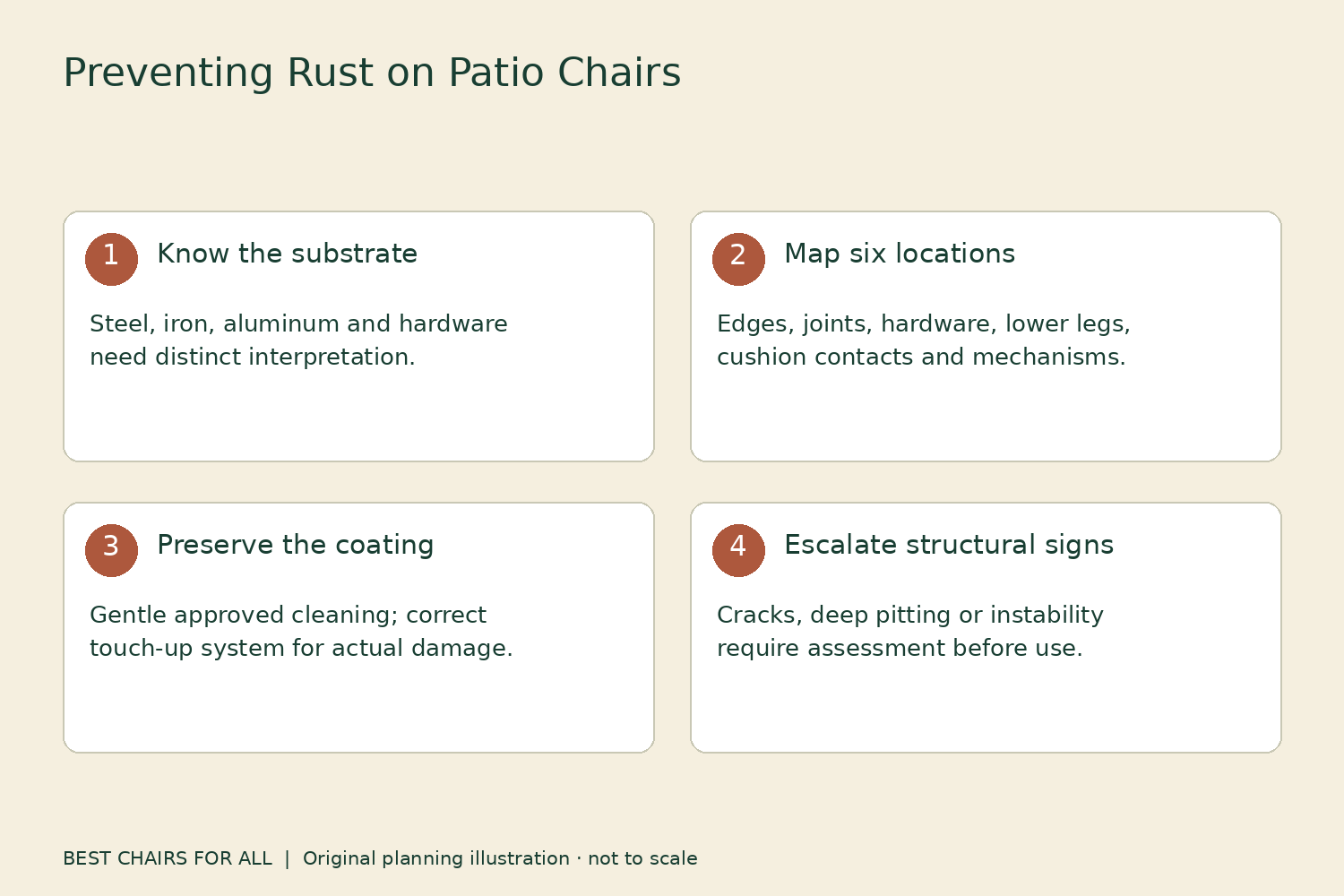
Rust prevention also starts with identification. Steel, iron, aluminum and stainless steel have different corrosion behavior, and fasteners can be a different metal from the frame. A brown stain on an aluminum chair may involve hardware or transferred contamination rather than iron rust originating in the aluminum itself. Describe the location and material before choosing a treatment.
Identify the metal and coating
Find the chair model and materials specification. Record whether the frame is steel, iron, aluminum or another stated material, and whether the finish is powder coating, paint or a different system. Do not infer the metal from weight alone. A large aluminum chair can be substantial, and a thin steel frame can be relatively easy to lift.
Look for a finish code if you may need touch-up materials. Black, bronze and white are broad color descriptions, not necessarily a compatible coating specification. A product that matches the visible color can still be wrong for adhesion, preparation or flexibility. Ask the manufacturer for the supported touch-up route rather than beginning with a general aerosol paint.
Note mixed construction. A chair can have an aluminum main frame, steel bolts, a separate swivel base and plastic glides. Each exposed component can need attention. A weave or cushion may hide the lower assembly. Keep the whole model record together so a recurring mark can be traced to the correct part rather than treated as one uniform metal surface.
Understand what moisture changes
IKEA’s rust guidance explains the role of iron, oxygen and water and points owners toward their product’s care instructions. A practical prevention routine therefore focuses on removing contamination, avoiding unnecessary persistent moisture and maintaining the intended protective surface. It does not require coating every chair with an improvised oily film.
Look at actual wet-contact points. A cushion can hold moisture against an arm or seat support. Leaves can collect around a lower joint. Irrigation can repeatedly wet the same side. A chair leg standing in a puddle faces a different exposure from the upper back, even though both are outdoors for the same number of days.
Map those locations before selecting a remedy. Moving a sprinkler’s permitted watering pattern, keeping a drain clear or choosing a drier storage position can address the cause more effectively than repeatedly wiping away a stain. Do not alter building drainage or drill furniture members as an informal solution. Use the chair’s designed openings and storage orientation.
Inspect the finish where wear begins
Examine arm edges, seat-frame corners, folding contacts, welded joints, fastener heads and lower legs. These are places where use, movement or contact can reveal damage. Include the underside, where deterioration may be less visible. Use good light and avoid running bare fingers across a sharp flaking area.
Photograph chips and stains with a date. A small coating defect can be easier to address before it spreads, but its size alone does not establish the underlying condition. If the surrounding metal is thin, pitted, cracked or deforming, the problem may be more than cosmetic. Keep the chair out of use while obtaining an appropriate assessment.
Do not scrape a large area simply to see how much finish comes off. That turns inspection into surface removal. Record what is visible and ask about the correct preparation. A rust remover or abrasive suitable for bare steel can damage a nearby coating, plated component or synthetic weave. The repair system should match both the metal and the finish.
Clean before choosing a stronger treatment
Follow the maker’s ordinary wash method with the specified soft cloth or brush. Remove loose dirt and rinse away approved cleaner as directed. Do not assume an industrial degreaser or deck-cleaning product is appropriate because the stain is outdoors. Protect fabric and adjacent finishes from runoff.
SunVilla’s aluminum-frame care guidance recommends mild soap and water, thorough rinsing and drying with a soft cloth, while avoiding abrasive pads that can scratch the powder-coated finish. This is a named manufacturer’s example of preserving a coating during cleaning. Use your actual chair’s instructions for the equivalent step.
Dry accessible wet areas as directed and observe the clean surface. A removable dirty deposit may look different from a damaged finish after washing. If the mark remains, document it rather than immediately applying a rust converter. The appropriate treatment depends on what metal is exposed and whether the chair’s finish system allows that product.
Coastal and pool settings need a specific routine
Tropitone’s product care page discusses salt and chloride accumulation on finishes in seaside and indoor pool environments, and the role of regular cleaning. Its guidance shows why a chair can need attention even without constant visible rain. Contaminants can remain after moisture evaporates.
Ask the maker what cleaning frequency and rinse method it recommends for your setting. Do not invent a universal weekly schedule for every climate. Inspect after actual exposure and adjust the routine within the manufacturer’s guidance. A chair close to a pool or salt spray may have different needs from the same model on a sheltered inland porch.
Keep hardware in the routine. A clean broad frame panel does not establish that recessed fasteners are free of deposits. Reach accessible areas gently without removing structural parts. If corrosion keeps returning at one joint, ask support whether the fastener, finish or connection needs service. Repeated cosmetic wiping should not replace investigating a recurring source.
Touch up only through an approved system
If the maker supports a coating repair, obtain the correct product and preparation instructions. The process may involve cleaning, limited removal of loose material, a compatible primer or a specific touch-up finish. Do not combine products from unrelated repair recipes without checking compatibility. Follow the current label for conditions, drying and protective equipment.
Treat the surrounding upholstery and patio as separate surfaces to protect. Overspray can be difficult to remove from fabric or porous stone. Arrange a suitable work area instead of spraying the chair where it stands among other furniture. Never paint over a wet, dirty or structurally concerning area simply to hide the color change.
Allow the required cure or drying time before use. A surface that feels dry to a light touch may not be ready for folding contacts or full service. Keep the repaired area identified and recheck it under the maker’s guidance. The goal is a documented compatible repair, not merely a close color match on the day it is applied.
Do not coat moving parts indiscriminately
A squeak, stiff hinge or corroded pivot needs the mechanism’s own service instructions. Oil or lubricant applied over the whole chair can contaminate fabric, collect dirt or interfere with finishing later. The fact that a product is marketed as a water displacer does not make it the correct long-term protection for every painted surface.
Tropitone provides separate lubrication and maintenance guidance for its moving components. Follow the relevant instructions for your chair and use the named type only where directed. Do not dismantle a sealed swivel, gas, powered or spring-loaded assembly as a household rust-prevention task. Ask the manufacturer or a qualified service provider for the proper route.
If a mechanism binds or a fastener is missing, take the chair out of service until repaired. A fresh coating on neighboring metal does not solve an unreliable lock or pivot. Keep structural and cosmetic decisions separate, especially when a chair still looks attractive from the front but behaves differently during normal movement.
Use a vulnerability map
| Location | What to observe | Action to resolve |
|---|---|---|
| Arm and seat edges | Chips, rubbing and exposed substrate | Approved finish repair if appropriate |
| Joints and welds | Stains, cracks, pitting or movement | Document and assess structural concerns |
| Hardware | Deposits, corrosion, loose or missing parts | Clean or replace by model instructions |
| Lower legs | Persistent wet contact and missing glides | Correct location and fit proper glides |
| Under cushions | Trapped dampness and debris | Dry and clean each component separately |
| Moving assembly | Binding, unusual movement or damaged coating | Use mechanism-specific service guidance |
For a hypothetical four-chair set, record the same six locations on each chair, giving twenty-four observations. This is an inspection organization tool, not a test score. One serious finding should not disappear into an average of otherwise clean surfaces. Keep any chair with unresolved structural damage clearly separate from ready seating.
Store to avoid repeated damage
Move furniture using its intended handling points rather than dragging it. Dragging can wear glides and lower finishes, and stacking unsuitable chairs can create repeated contact marks. Stack only products designed for it and follow the specified arrangement. Keep metal edges from rubbing through coatings during transport or seasonal storage.
Use a suitable dry storage location or fitted cover according to the maker. Covering damp furniture can preserve moisture rather than remove it. Keep intended ventilation available and inspect beneath a cover after conditions that could introduce water. Do not wrap a chair tightly in unventilated plastic merely because you want a sealed appearance.
Before the next season, compare new condition with the dated photographs. Confirm that repairs remain intact and that recurring marks have a resolved explanation. Rust prevention is most effective when you preserve the finish, control avoidable wet contact and respond early to specific damage. It should leave the chair’s materials and condition understood rather than hidden beneath a succession of unverified coatings.
Something unclear or out of date? Send a correction with this article’s title and the detail to check.
Sources, research & corrections policy ↗