Clean outdoor chair cushions according to both the fabric instructions and the finished cushion’s care label. Begin with loose dirt and fresh spills, use the mildest approved method that addresses the problem, rinse as directed and allow the complete construction to dry. A zipper, performance-fabric label or removable-looking cover does not automatically mean the cushion can be machine washed.
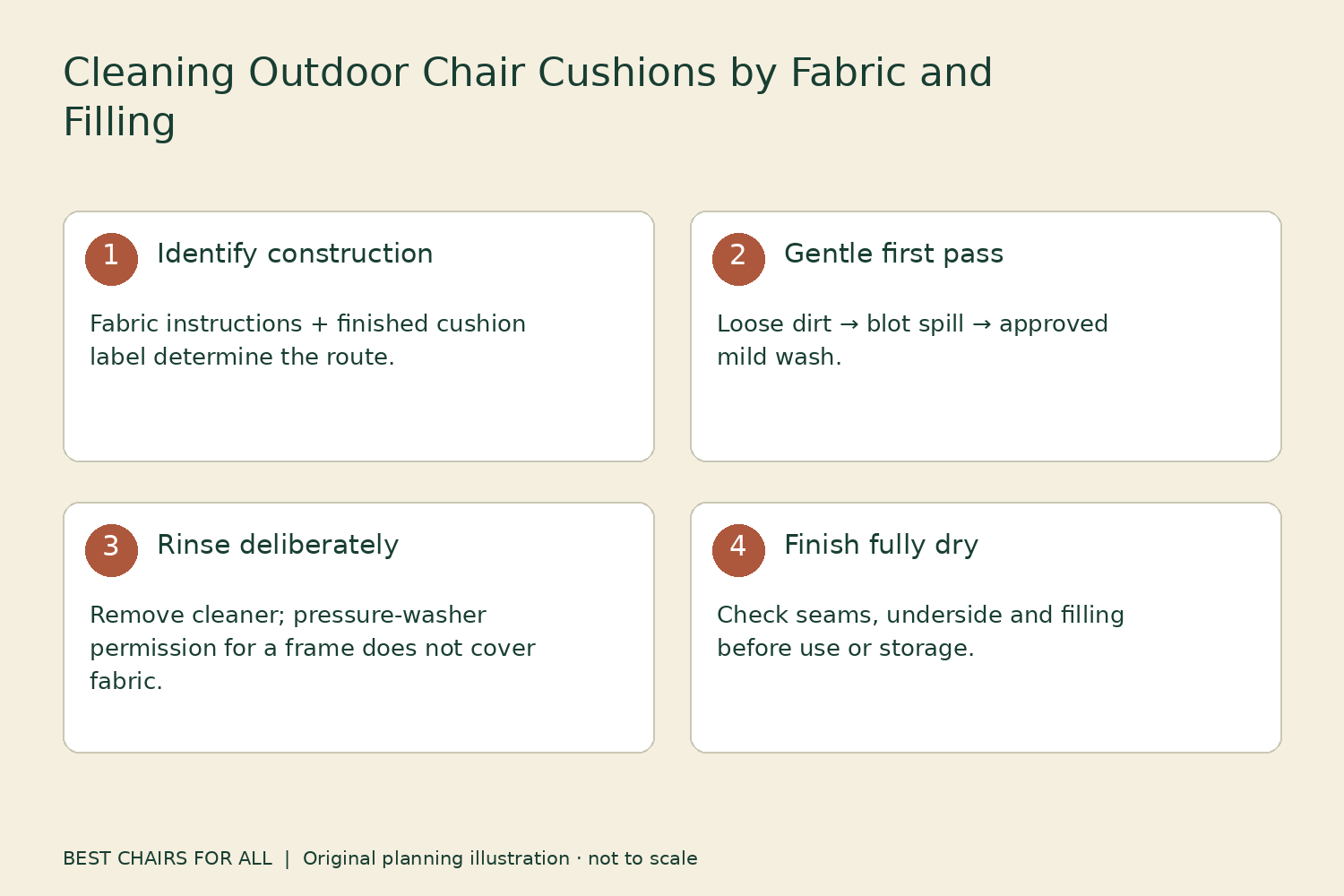
The method below is organized around decisions you can make before wetting the filling. It uses named Sunbrella upholstery and furniture-maker guidance as examples. Other fabrics, coatings and fillings may need different treatment. If the fabric identity or cleaning permission is unknown, find that information before using bleach, solvents, a pressure washer or a washing machine.
Make a label record first
Photograph the cushion label and the chair’s model information. Find the fabric brand and range, filling description, cover-removal permission and drying instructions. Record any earlier treatment or repair if you know it. A replacement cover made by a different manufacturer can have instructions that differ from the original chair’s cushions.
Separate the cleaning question into three layers: outer fabric, seams and closures, and internal filling. A fabric may tolerate a cleaning solution that is unsuitable for adjacent trim or the chair finish. A removable cover may be difficult to reinstall over a shaped filling. Read the finished-product instructions alongside the fabric maker’s guidance instead of choosing whichever seems most convenient.
If the label is missing, contact the furniture maker with a photograph and model number. Explain the stain rather than guessing its chemistry. “Sticky dark mark after a spilled drink” is more useful than confidently identifying it as mold without evidence. Keep any written advice so the next cleaning session begins with the same confirmed information.
Prepare a practical cleaning area
Choose a working surface that can handle the approved cleaner and rinse water. Protect nearby finishes and remove other fabrics that could be affected. Keep runoff away from places where the cleaner label says it should not go. Plan where the cushion will dry before starting, especially when thick filling may take longer than the visible cover.
Use separate clean tools for fabric and dirty chair feet or frames. A brush that has just scrubbed a metal joint can carry grit or residue onto upholstery. Favor the soft tool specified by the maker. Do not use a stiff deck brush simply because it makes a surface mark fade quickly; abrasion can create a different long-term problem.
Keep the cleaning solution label available and follow its protective-equipment and ventilation instructions. Do not mix household cleaners or combine a stain recipe with another product. A stronger mixture is not automatically more effective and can be incompatible with the fabric or surrounding components. If a recipe and product label appear inconsistent, ask for clarification before proceeding.
Remove loose dirt before adding water
Brush or vacuum loose material using the maker’s allowed attachment. Check seams, piping, tufting and the back edge where debris collects. Work gently without pulling on damaged stitching. Wetting a cushion covered in dust or crumbs can move that material into the weave or spread the dirty water over a larger area.
Inspect for tears while the surface is accessible. An open seam can admit more water and may need repair before a full cleaning. Do not pull the cover taut around a split to make it easier to scrub. If filling is exposed or the fabric is deteriorating broadly, ask whether cleaning or replacement is the appropriate next step.
Remove the cushion from the chair if its design permits. This lets you protect the frame from cleaners and inspect the underside. A cushion fixed to a frame needs a different runoff plan. Do not cut ties, staples or permanent attachments just to use a removable-cushion cleaning routine.
Handle a fresh spill without grinding it in
The Sunbrella upholstery care sheet begins fresh liquid-spill care with blotting rather than rubbing. Use a clean absorbent cloth and avoid spreading the spill into a larger area. The aim is to lift available liquid before it dries or is worked into the material.
Do not press a sharp tool into the fabric to scrape a sticky mark. Follow the fabric maker’s stain-specific directions when something remains after the first gentle cleaning. Oils, ink, food and unknown residues may need different approaches. Identify the exact material and consult the appropriate guide rather than treating every dark mark with the same chemical.
Work on a clean area of the cloth as it picks up contamination. A dirty cloth can redeposit what you have just removed. Keep the cushion’s original orientation in mind, particularly if the underside is a drainage panel. Cleaning should preserve the intended construction rather than flipping every piece into whichever position is easiest to reach.
Use a model-approved general wash
SunVilla’s Sunbrella cushion guidance uses a gentle sequence: remove loose dirt, use mild soap and lukewarm water with a soft brush or sponge, rinse thoroughly and air dry. This is a named furniture-maker example. It is not permission to saturate every outdoor cushion or use the same method on unknown fabric.
For the Sunbrella outdoor upholstery covered by its care sheet, the general hand-cleaning solution is one-quarter cup of mild soap per gallon of lukewarm water. Follow the current sheet and finished-cushion instructions for application. Do not quietly increase the amount because the cushion looks especially dirty. More residue can make rinsing harder without solving an incompatible stain.
Clean the area in the manner specified by the fabric guide. Sunbrella discusses seam-to-seam cleaning to reduce rings and uneven residue. That means considering a whole defined fabric surface rather than repeatedly attacking a tiny circle. Keep the action gentle and stop if color transfers unexpectedly, trim changes or the fabric begins to abrade.
Rinse to remove the cleaner
Rinsing is part of cleaning, not merely a final cosmetic step. Follow the maker’s direction to remove soap thoroughly. Look for remaining suds or a slippery residue, while recognizing that a household observation is not a chemical test. Repeatedly adding more soap before the previous application is removed can make the job unnecessarily difficult.
Use the water delivery method approved for the cushion. A hose rinse and a pressure-washer jet are very different. High-pressure cleaning can damage fabric or force water into filling; do not use it unless the actual cushion maker expressly permits that procedure. A pressure-washing permission for a chair frame does not apply automatically to its upholstery.
If a stained patch remains after the approved general wash, let the instructions guide the next step. Do not layer bleach, solvent and detergent treatments one after another without checking compatibility and rinsing requirements. Photograph persistent staining and ask support for a specific method if the cause is uncertain.
Machine washing needs two permissions
First establish that the finished cushion allows the cover to be removed and reinstalled. Then confirm that the fabric and construction permit machine washing under the intended cycle and detergent. A zipper can exist for factory assembly or servicing. Its presence alone is not a laundry instruction.
Jensen Outdoor’s cushion care guide recommends handwashing its outdoor cushions because fitted covers can be difficult to replace, even though the Sunbrella fabric itself may be washable. That practical warning shows why fabric capability and finished-cushion handling are separate questions.
If removal and machine washing are allowed, label matching covers and fillings before separating them. Follow the exact temperature, cycle, zipper and drying directions. Do not wash the filling unless the maker allows it. Preserve the orientation of shaped foam and internal wraps; changing their position can alter fit and drainage after reassembly.
Treat mold or mildew under the actual fabric guide
Performance fabric can still carry dirt on which mildew develops. Do not assume resistance means the cushion needs no cleaning or that every dark spot proves mildew. Identify the problem and use the maker’s stain instructions. Keep damaged, persistently wet or unpleasant-smelling filling out of storage while you seek advice.
Sunbrella provides a diluted-bleach method for mold and mildew on the upholstery addressed by its guide, and SunVilla points users to those official instructions. That permission is specific. It does not cover unknown polyester, printed trims, other cushions or the chair beneath. Use the current formula and precautions from the linked guide rather than adapting a stronger household recipe.
Protect the surrounding area and rinse as directed. Never mix bleach with ammonia, acids or other cleaning products. If a professional cleaner handles the cushions, provide the fabric identity and finished-product instructions. Ask whether the service understands that construction instead of assuming ordinary carpet-cleaning methods transfer to thick outdoor upholstery.
A cleaning route card
| Finding | Next step |
|---|---|
| Unknown fabric or missing label | Identify model and obtain care instructions |
| Loose dirt | Remove gently using approved dry tools |
| Fresh spill | Blot and follow the fabric’s initial treatment |
| General soil | Use approved mild wash, then thorough rinsing |
| Cover appears removable | Confirm removal and washing permissions separately |
| Persistent specific stain | Use the exact stain guide or contact support |
| Wet filling or damaged seams | Resolve condition before packing away |
Record the date and cleaner used, especially if the cushion will receive a permitted retreatment later. Keeping a short record prevents another household member from adding an incompatible product because they did not know what was already applied. The card should remain specific to each cushion type rather than serving as one recipe for the whole patio.
Finish with complete drying
Air dry according to the maker’s instructions, exposing the permitted surfaces and allowing the filling time to release moisture. Do not use a tumble dryer, heater or other heat source as a shortcut unless the actual instructions allow it. Drying a removable cover and drying an intact padded cushion are different tasks.
Check the underside, seams and thick areas before returning the cushion to a cover or storage container. If a zipper may be opened for drying, do so only under the product guidance. Refit clean covers in their correct orientation and inspect retention ties before use. The cleaning job ends when the complete cushion is ready for normal use or storage, not merely when the visible stain has disappeared.
Something unclear or out of date? Send a correction with this article’s title and the detail to check.
Sources, research & corrections policy ↗