Clean a nursery glider by matching the spill and the exact fabric to the manufacturer’s care instructions. Blotting promptly helps, but a removable-looking cover, a stain-resistant description or a polyester label does not automatically permit soaking, machine washing or steam cleaning.
Identify the fabric before choosing a cleaner
Find the upholstery name, SKU, care label and model instructions. A chair may have several fabric options with different care requirements. Babyletto’s current fabric-care page gives a specific routine for its listed Luxe and Eco-Performance fabrics: spot-test, gently blot with the described soap solution, remove residue with a damp cloth and air-dry. It also says no bleach and no steam. Apply this only when it matches the actual fabric and product instructions.
For context, Pottery Barn Kids’ Kiwi care listing separately discusses furniture finishes and cleaning. A finish-care sentence is not permission to saturate the upholstery. When two documents appear different, ask the manufacturer which applies to the specific fabric and production revision.
Handle a fresh spill without spreading it
Remove the baby and keep children away from the cleaning area. Lift off loose material carefully, then blot liquid with a clean absorbent cloth rather than rubbing it into a wider patch. Use the permitted cleaner only after checking the care instructions and testing a hidden area. Work with small amounts; pouring liquid into a seam risks wetting the cushion and the mechanism underneath.
Clean the affected fabric according to the approved method, remove permitted residue and allow complete drying before the chair returns to use. Do not speed drying with an unapproved heat source. If the spill has penetrated inaccessible padding or reached electrical parts, stop and ask the manufacturer about service or professional cleaning instead of covering the area with a throw.
Keep upholstery work separate from the mechanism
A glider’s base and recliner linkage are not upholstery. Do not put hands into moving parts, spray cleaners into controls or lubricate a mechanism to address a stain or smell. For powered furniture, follow the manual’s instructions for disconnecting power before appropriate cleaning. Do not open electrical modules or remove a motor cover.
A professional cleaner needs the same information you do: the model, fabric, care restrictions, stain history and whether the chair contains electrical components. Ask which method they propose before authorizing treatment. “Performance fabric” describes a product category or feature; it does not mean every solvent, extractor or sanitizer is acceptable.
Decide when cleaning is insufficient
Frayed seams, damaged controls, persistent dampness or an unknown cleaner already applied can change the next step. Photograph the condition and contact the manufacturer. Distinguish cleaning from disinfection; a mild upholstery routine is not a validated disinfecting process. Keep the chair unavailable until it is dry and suitable for use. NIH’s safe-sleep guidance still applies: a freshly cleaned armchair is adult seating, not an infant sleep surface.
Topic checklist
| Checkpoint | What to record and why it changes the decision |
|---|---|
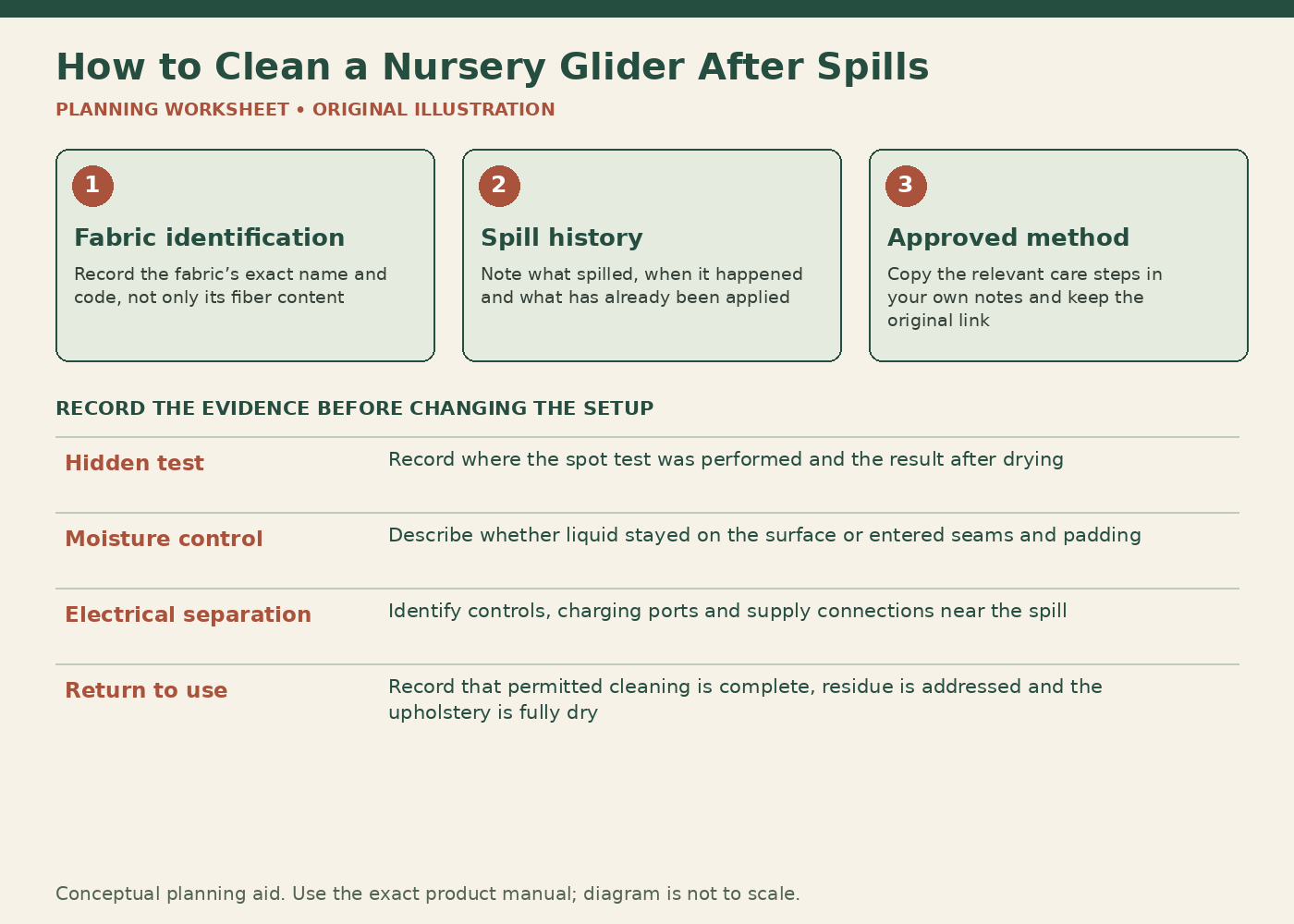
| Fabric identification | Record the fabric’s exact name and code, not only its fiber content. Different finishes and constructions can share the same fiber. Save a photograph of the care label and ask the manufacturer about any conflict between label and website. |
| Spill history | Note what spilled, when it happened and what has already been applied. Include water, stain removers and home remedies. This prevents a cleaner from treating an unknown mixture as an untouched food stain. |
| Approved method | Copy the relevant care steps in your own notes and keep the original link. Do not substitute a strong detergent for a named mild routine. A solution suitable for a hard armrest finish may not suit the upholstered seat. |
| Hidden test | Record where the spot test was performed and the result after drying. A wet patch can temporarily conceal discoloration. Do not continue across the visible seat if the hidden area changes color, texture or appearance. |
| Moisture control | Describe whether liquid stayed on the surface or entered seams and padding. Avoid repeated soaking to chase a mark. Contact the manufacturer or an appropriate professional when drying or access is uncertain. |
| Electrical separation | Identify controls, charging ports and supply connections near the spill. Follow the exact manual for power isolation. Liquid entry into an electrical area is a service question, not a cue to keep operating the chair while it dries. |
| Return to use | Record that permitted cleaning is complete, residue is addressed and the upholstery is fully dry. Recheck the surrounding floor and chair position. Store cleaning materials away from children rather than beside the feeding supplies. |
Worked example: use the result, not just the number
A parent notices a fresh milk spill on a hypothetical glider and finds a fabric label matching Babyletto’s listed care category. The useful sequence is to remove loose liquid, check the matching care directions, spot-test the stated solution and blot with controlled moisture. The parent does not infer that the whole cushion can go in the washing machine because a seam includes a zipper.
If the same spill runs into the powered control panel, the worksheet changes. The affected component is now electrical as well as upholstered, so the parent follows the manual’s power instructions and contacts the manufacturer. Cleaning the fabric does not resolve uncertainty about liquid inside the control. The final record should distinguish the cosmetic result from the service decision, with the chair kept out of use as needed until the issue is resolved.
An exact-fabric cleaning decision tree
First ask whether the spill is confined to an accessible upholstered surface. If yes, identify the fabric and its approved care routine. If no, document the route into padding, seams, wood joints or electrical parts and ask the manufacturer about the next step. Do not start by choosing the strongest product under the sink. The same visible stain can require a different response depending on where the liquid traveled.
Next ask whether the cover is explicitly removable and washable. A zipper can provide factory access or allow an approved cushion arrangement without making the fabric machine washable. Look for a model-specific removal instruction and care label. If neither establishes removal, leave the cover on and follow the permitted surface method. If washing is authorized, follow its stated temperature, cycle, detergent and drying limits rather than importing instructions from another chair.
Use Babyletto’s care recipe only for the matching fabric
The researched Babyletto fabric-care page describes mixing one tablespoon of liquid dish soap with 16 ounces of room-temperature water for the indicated fabric category. It calls for a hidden-area test, gentle blotting with a dampened cloth, a second plain-water cloth to remove residue and complete air drying without heat. These details are an example of a manufacturer-defined method, not a general recipe for every nursery chair.
Measure the ingredients rather than assuming more soap cleans faster. A concentrated solution can leave more residue to address, while excessive rinsing can wet the upholstery unnecessarily. Use clean cloth areas as the stain transfers. Stop if the surface changes appearance or the spill spreads beyond the area you can treat with controlled moisture. The source’s no-bleach and no-steam restrictions matter even when a machine or cleaner is marketed for household upholstery.
Build a spill log that prevents repeated treatment
For a persistent mark, write a short timeline: spill type, approximate time, first blotting, product used, solution strength if known, treated area and drying result. Include a photograph in even lighting. A stain that looks lighter while wet may look different when fully dry; record the final condition before applying another product. This gives a manufacturer or cleaner enough information to avoid unknowingly combining treatments.
Keep cosmetic marks separate from structural damage. A small discoloration does not by itself establish unsafe furniture, while a split seam, softened panel or liquid-affected switch can need service even if the fabric looks clean. Do not repeatedly soak an area to achieve a visual result when moisture is entering inaccessible padding. Ask whether an approved replacement cover, cushion or professional method is available for the exact fabric and model.
Prepare the chair and room for drying
Choose the approved cleaning position before wetting anything. Remove loose items from the seat and keep the separate infant sleep space available. Keep the baby out of the chair throughout cleaning and drying. Avoid leaving a damp cloth, cleaning bottle or a basin within a child’s reach. If the chair is powered, follow the manual for the permitted power-disconnection sequence; do not spray near ports or controls.
Air drying takes the time the actual upholstery and room conditions require. Do not promise a universal number of hours, cover damp fabric with a cushion or use the chair because only the top feels dry. Ask the manufacturer about a spill that may have soaked padding. Before restoring use, inspect the floor for drips, confirm controls and cords have not been displaced, and put only the approved cushions and accessories back in their intended arrangement.
A cleaning kit can be deliberately small: clean soft cloths, the product specifically permitted by the fabric instructions, a way to measure its dilution and access to the saved care label. Keep a separate cloth for the frame so a finish-care product does not transfer onto upholstery. Label any manufacturer correspondence with the fabric code. This makes the next spill easier to address without accumulating increasingly strong treatments that were never approved for that material.
Official references and document checks
The linked documents below were researched for this article on November 6, 2026. Manufacturer instructions, available configurations and safety notices can change. Consult the document for the exact product in front of you; references to another market or an older revision provide context and do not establish compatibility for your chair.
- Babyletto swatches and fabric care
- Pottery Barn Kids: Babyletto Kiwi dimensions and care
- NIH Safe to Sleep: Ways to Reduce Baby’s Risk
- CPSC: Babyletto Kiwi electronic recliner USB recall
Something unclear or out of date? Send a correction with this article’s title and the detail to check.
Sources, research & corrections policy ↗