Clean a bouclé chair with a method that protects its looped texture and matches the exact fabric’s care instructions. Begin by removing loose dust with the permitted upholstery attachment. Treat a spill only with an approved process, using a discreet test first. Do not pull a loop, scrub a mark aggressively, or assume all bouclé can be washed because another chair’s fabric tolerates water.
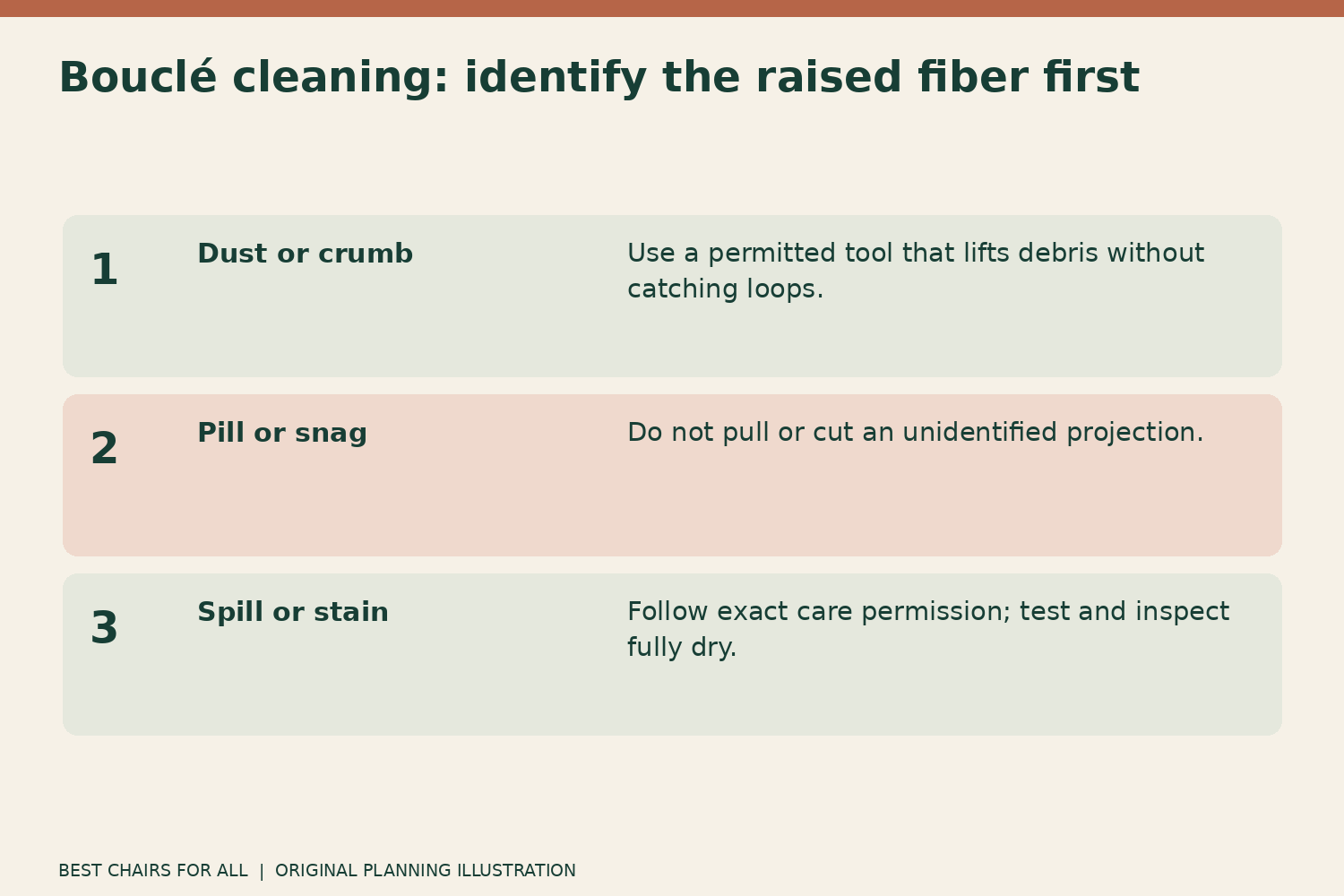
The essential distinction is between loose debris, surface pilling, a pulled yarn, and an actual stain. Each needs a different response. A cleaning tool can remove dust but also catch a loop; a stain product can remove soil but leave a ring or changed texture. Use the chair’s material code and written directions to decide which action is appropriate.
Identify the textile behind the texture
Bouclé describes a yarn or textile texture, not a single fiber. A chair might use a wool-rich fabric, a cotton blend, or a predominantly synthetic construction. Finishing and backing also matter. Find the upholstery label or order information and record the complete fabric name, color code, composition, and intended cleaning method.
Kvadrat’s Baru product guidance identifies a woollen bouclé and gives specific care symbols, including do not wash and professional dry cleaning by a mild process. That is a useful counterexample to the assumption that every soft looped fabric can go into a washing machine.
If a chair maker names a textile supplier, use that exact textile reference rather than selecting the nearest-looking sample online. A similar cream bouclé can have a different blend and finish. Ask the furniture maker to reconcile unclear or conflicting instructions, because upholstery construction can add limits beyond the fabric’s general care.
Look closely before touching a raised fiber
Normal bouclé contains intentional curls and irregularities. A new projection might be part of that texture, a small pill of loose fibers, a transferred fiber from clothing, or a pulled section of yarn. Photograph it under good light and compare it with an undisturbed area before deciding that it should be removed.
A snag often changes the surrounding weave as well as creating a protrusion. Pulling it can tighten or distort a larger area. Do not cut a loop simply because it looks longer than its neighbors. Ask the manufacturer or an upholsterer to identify the condition and the appropriate repair if you are uncertain.
Pilling tools also need product-specific permission. Some furniture care guides allow them for their fabrics, but that does not make a clothing shaver suitable for every bouclé. A blade or rotating head that catches a structural loop can turn a small appearance issue into visible damage.
Prepare a tool that will not catch the surface
Inspect the upholstery nozzle or brush before use. Remove trapped grit and check for rough plastic edges, damaged bristles, exposed fasteners, or anything that could snag yarn. Follow the vacuum and chair makers’ instructions for attachment and suction. Avoid assuming a powerful motorized pet brush is suitable merely because the chair collects hair.
GlobeWest’s bouclé and textured-fabric care guidance recommends gentle vacuuming with an upholstery brush attachment and warns against excessive rubbing and abrasive treatment. Its advice reinforces the need to lift debris without working harshly against the texture.
Try the permitted tool discreetly before moving across a prominent arm or seat front. If it grabs, lifts loops, or drags the cover, stop and reassess. Do not compensate for a catching attachment by increasing speed or pressure. A cleaning pass should leave the structure undisturbed.
Remove loose debris before considering liquid
Work methodically across the chair, using the approved direction and gentle passes. Lift the nozzle between areas rather than dragging it over piping or catching it at a seam. Pay attention to the spaces where a loose seat cushion meets the arms, provided removal is intended and the underlying area can be accessed normally.
Dry crumbs can become a larger cleaning problem when pressed into a textured surface with a damp cloth. Remove loose material first using the permitted dry method. For material lodged deep in the weave, do not dig with a pin, fingernail, or stiff brush. Ask for professional advice if ordinary gentle removal does not work.
If hair or lint remains, check whether the manufacturer approves an adhesive or other lint tool. Texture alone does not establish compatibility. Avoid using a sticky tape of unknown strength across loops, and stop if the tool pulls more than loose surface debris.
Keep specialized grooming advice tied to its fabric
Molteni&C’s Zodiaco bouclé maintenance sheet describes a particular routine involving soft vacuum brushes, directional clothes-brush work, and other specified grooming. It also names its fabric and composition. Those details belong together rather than becoming instructions for all bouclé furniture.
If your chair uses that exact material, follow the complete applicable sheet and the finished chair’s directions. If it uses another fabric, ask whether comparable grooming is appropriate before trying it. This is especially relevant for adhesive brushing and heat-related methods, which can affect loops, finishes, and the assembly beneath the fabric.
Do not use a steam iron to fluff an unidentified bouclé chair simply because a manufacturer’s guide permits a protected process for one named textile. A material-specific permission is useful evidence, but it is not a category-wide cleaning rule.
Respond to spills without grinding them into the loops
Follow the exact chair instructions promptly. Where a permitted process calls for blotting, use a clean absorbent white cloth and gentle contact rather than rubbing back and forth. Move to a clean part of the cloth as soil transfers. Avoid dragging a sticky spill across loops or pushing moisture into seams.
GlobeWest’s guidance for its textured upholstery warns against over-wetting because moisture can lead to marks or fabric damage. Treat that as a specific reason to control the permitted process, not a license to use a small amount of any cleaner. The product, dilution, and method still need to match your chair.
For an unknown spill, ink, dye transfer, or an oily substance, identify the material and seek the manufacturer’s advice before adding a household solvent or detergent. Keep a note of the incident and any treatment already attempted. Combining several improvised products can make the remaining problem harder to assess.
Run an approved test and inspect it fully dry
Choose a discreet area of the same upholstery where testing is allowed. Follow the authorized product’s label and the furniture instructions exactly. Do not strengthen a solution, substitute a different brush, or extend application time because the stain looks difficult. The test needs to represent the method you are actually considering.
After the area dries fully according to the instructions, inspect the color, loop definition, stiffness, and any edge mark. Look from several directions in consistent lighting. If the loops appear flattened, the surface feels different, or a ring remains, stop before treating the visible area and document the result.
A successful small test reduces uncertainty but does not guarantee that a large stained cushion will respond uniformly. Widespread soil, repeated water rings, or contamination that reaches the filling may need professional assessment. Do not expand a spot process into a full-chair soaking or extraction procedure without explicit permission.
A loop-safe care decision map
This original map distinguishes routine cleaning from repair and stain treatment. Use it beside the actual care label. It does not assign a universal chemical or tool to bouclé; it helps determine which type of problem you have and what information is still needed.
| What you observe | First response | Stop or escalate when |
|---|---|---|
| Loose dust or dry crumbs | Permitted gentle upholstery vacuuming | Attachment catches or debris remains embedded |
| Isolated long loop | Photograph without pulling or cutting | Weave distortion or uncertainty about yarn |
| Small surface pills | Ask which grooming tool the maker allows | No permission or tool catches loops |
| Fresh liquid spill | Use the label’s immediate response | Unknown chemistry or spreading wet area |
| Persistent ring or broad stain | Record history and seek assessment | Repeated treatments change color or texture |
For a worked example, a raised thread appears after a belt buckle catches the seat. Treat it as a possible snag rather than ordinary lint. Vacuuming repeatedly or shaving the projection could worsen the weave. A photograph and the fabric code give the maker a better basis for repair advice.
Care for cushion shape separately from the cover
A rumpled surface can come from filling that has settled rather than from dirty fabric. Follow the chair maker’s instructions for rotating, turning, or reshaping loose cushions. Do not flip an asymmetric cushion or one with a different underside unless that use is intended.
Removing a cover may also stress loops near a tight zipper or seam. Confirm that removal is permitted and use the specified procedure. A fabric labeled do not wash does not become washable because the cushion can be lifted from the chair. Keep cover care and filling maintenance as separate tasks.
Make the routine easy to repeat
Keep the approved attachment and care information together, and inspect frequently touched areas during normal cleaning. Remove sharp objects from pockets before sitting, and keep household sprays from drifting onto the upholstery. A protector or scented refresher can introduce another chemical treatment and should not be added without manufacturer support.
For professional cleaning, provide the fabric code, chair construction information, photographs, spill history, and previous products used. Ask the cleaner to explain the proposed method against those instructions. Preserve the successful method in your records so later maintenance protects the loops and addresses the actual soil instead of repeating a generic bouclé-cleaning recipe.
When reporting a snag, include one close photograph and one showing its location on the whole chair. Place a ruler beside the area without pressing on the loops so the repair assessor can understand its scale.
Something unclear or out of date? Send a correction with this article’s title and the detail to check.
Sources, research & corrections policy ↗