Felt pads and chair glides are overlapping categories, not a strict choice between soft and hard protection. A glide can have a felt face, and a felt pad can attach with adhesive, a fitted cap, or another system. Choose the floor-facing material and the attachment separately. The right combination matches the flooring instructions, chair-leg shape, expected movement, and maintenance you can actually perform.
Name the two parts of the decision
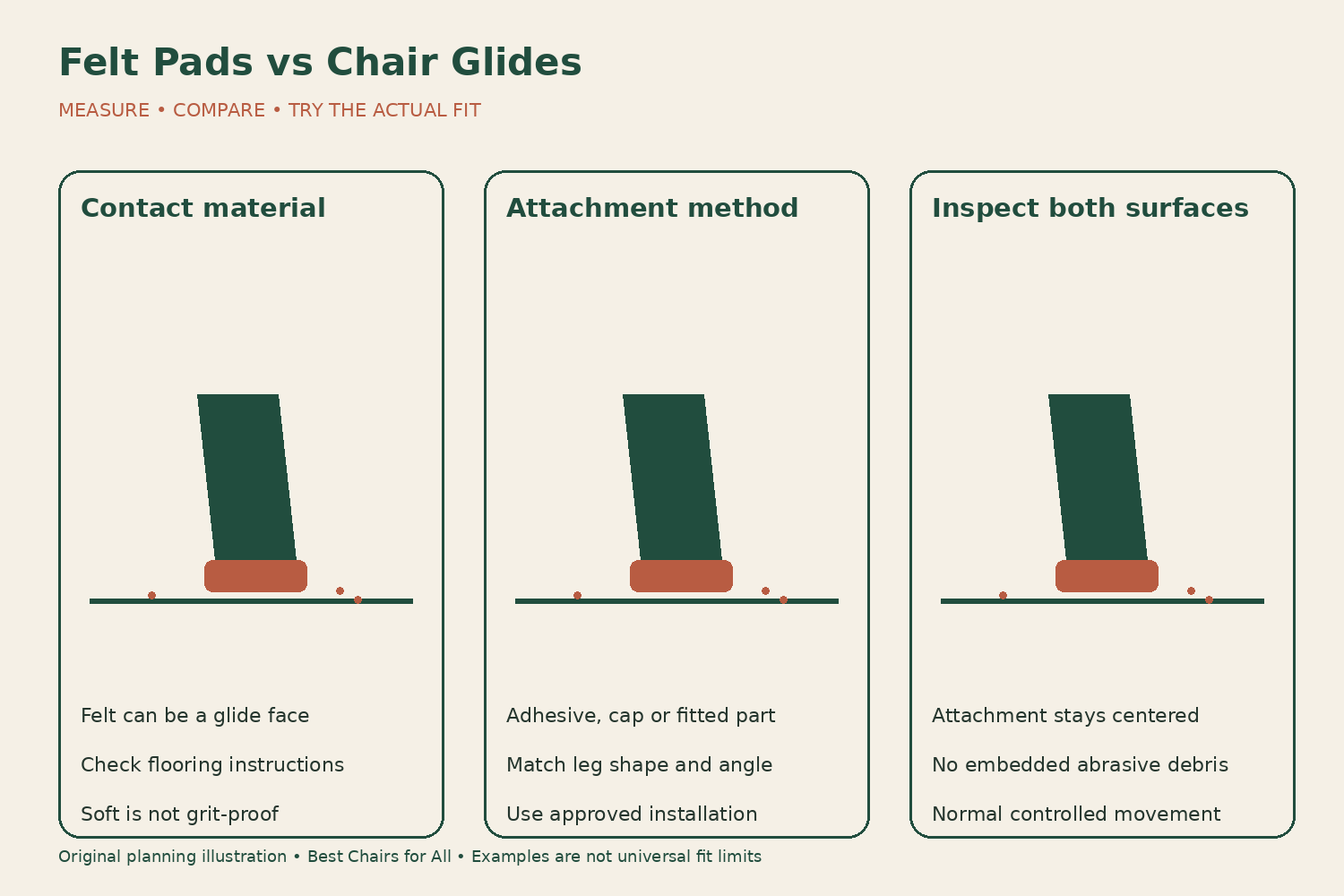
The contact material touches the floor: examples include felt or a specified hard glide surface. The attachment holds that material to the chair: examples include an adhesive backing, a sleeve, a clip, or an approved fastener. Saying “felt versus glides” mixes those decisions. Start by describing both the material and fitting method of each candidate.
For example, an adhesive felt circle and a fitted glide with a felt insert may use similar floor contact while behaving differently at the leg. A hard cap and a hard-faced screw-in glide may likewise share a contact material but require different installation. Compare the actual products rather than assuming every item sold as a glide is made for carpet or every felt item is simply a sticker.
Lowe’s pad-and-glide installation guide presents several materials and attachment approaches and emphasizes matching the protection to the floor. Use that as a framework for comparison, then read the instructions for the exact protector and chair. The generic category does not settle compatibility.
Let the floor guidance narrow the material
On wood floors, Bona recommends felt pads on chairs and tables and discourages dragging furniture. That makes suitable felt protection a sensible starting point when it matches the floor finish and furniture. It does not mean a worn felt surface remains protective or that a poor attachment becomes acceptable because the material is soft.
For luxury vinyl tile, Shaw’s LVT bulletin recommends heavy-duty felt and warns about plastic chair protectors scratching that flooring. A hard glide included with a chair may therefore need review before use on that floor. Ask the flooring manufacturer about the applicable product rather than relying on a broad “floor safe” claim.
Carpet, textured tile, stone, and other surfaces need their own guidance. Do not choose a hard glide solely because it feels easier to move on one surface, and do not choose felt solely because it sounds gentler. A chair that crosses a rug edge onto hard flooring needs an assessment of the whole route, including catching and changing resistance.
Adhesive felt: inspect the bond and the face
Adhesive felt can be straightforward on a suitable flat foot, but the bottom must provide enough appropriate contact area. Follow the pad maker’s preparation instructions and the chair finish restrictions. A dirty, damp, oily, uneven, or sharply angled surface can prevent the intended attachment. Do not assume stronger household glue is the answer if the product repeatedly detaches.
Fit the pad so the leg’s contact area is protected without an unsupported flap that folds back during movement. Check the maker’s sizing directions before trimming. An undersized pad can leave an edge exposed, while an oversized pad may contact the floor in an unintended way. Measure the actual foot rather than the wider portion of the leg above it.
The felt face still needs inspection. Embedded grit, uneven compression, worn areas, or a pad that has shifted can change the interaction with the floor. Replace a compromised part according to the product guidance rather than leaving it until it falls off. A pad can remain attached while no longer providing the intended contact surface.
Fitted glides: inspect the interface with the leg
A fitted cap or sleeve must suit the leg’s shape and dimensions. Round, oval, square, tapered, and angled legs are different fitting problems. A supplier may ask for the outside diameter of a tube, its inside opening, or the dimensions of an existing glide. Read the measuring instructions carefully; those numbers are not interchangeable.
Expanded Technologies’ Floor Savers range includes protectors for different legs, existing glides, and sled bases. That range demonstrates why the attachment is a design decision. A cover intended to fit over an existing glide is not necessarily intended for a bare hollow tube or a solid wooden foot.
Check that the fitted component does not rotate, split, or slide out of position during normal movement. Do not force a too-small sleeve onto a leg or pack a too-large one with improvised filler. If no standard size fits, ask the chair manufacturer for a model-specific replacement or an approved alternative.
Fastened glides require compatible construction
Nail-in and screw-in parts may be suitable for some furniture constructions, but a generic product description is not permission to drive a fastener into any chair. Thin wood, hollow metal, concealed inserts, or angled ends can require another approach. Follow the chair maker’s guidance and the glide’s installation instructions together.
A fastener must not leave a hard head exposed at the floor or split the receiving material. If replacing an original fastened component, identify its part number and intended mounting. Do not choose a longer fastener merely because it appears more secure. A replacement can interfere with hidden construction or create damage that was not present before.
If installation would require drilling a structural tube, altering a leg, or dismantling a mechanism, stop and ask for qualified guidance. The task has moved beyond changing a consumable contact surface. A suitable floor protector should not be purchased on the assumption that the furniture can be modified to accept it.
Compare movement with normal users in mind
Some protectors make a chair easier to slide; others increase resistance. Neither result is automatically better. The chair should behave in a way the user can manage and the floor allows. A very slippery combination can feel unexpectedly mobile, while a high-resistance one can lead people to drag, twist, or pull at the back awkwardly.
Test an approved combination gently with the empty chair after cleaning the floor. Observe whether it catches, leaves marks, or shifts on the leg. Do not scrape a conspicuous floor area as an experiment to discover compatibility. Resolve the material question through manufacturer guidance before the normal-use trial.
Then assess the ordinary approach to the table. Check a rug edge, a table base, and any tight turn. A glide cannot solve a layout where the chair must repeatedly hit furniture to move into place. If the movement remains awkward, adjust the arrangement or choose a more suitable chair rather than assuming a more slippery contact face will fix everything.
A two-axis comparison worksheet
Make one column for floor-facing material and another for attachment. Add the flooring product, chair-foot measurements, leg angle, and the supplier’s compatibility statement. For each candidate, record how it is fitted and what preparation or tools are needed. This avoids comparing an adhesive pad’s convenience with a fitted glide’s durability as if they were universal properties of felt and plastic.
Next add four inspection questions: is the contact face clean, is the leg’s edge covered, is the attachment secure, and does the chair rest normally? Use these questions after installation and when movement changes. If a protector fails, record the location and failure type. “Pad shifted off angled rear foot” points to a fitting issue more clearly than “felt does not work.”
Keep price and replacement quantity separate from performance claims. A larger pack may cost less per part but be poor value if the size is wrong. A specialized fitted component may be practical if it is the correct replaceable part, but do not assume a higher price guarantees longer service. Actual use and inspection will reveal the maintenance requirement.
Plan maintenance instead of promising permanence
Clean the floor along the chair path and inspect the contact faces for trapped debris. Dining areas can gather crumbs, grit, and sticky residue under furniture that is difficult to reach. A protector that was appropriate when installed can become abrasive if contamination remains between it and the floor. Both surfaces need attention.
There is no useful universal replacement interval for all felt pads or all glides. Look at condition and how the chairs are used. Check again after moving furniture, adding a rug, changing flooring, or noticing new sound or resistance. Keep approved replacement parts on hand if practical, with the product details so another household member can identify them.
If you see new marks, stop the associated movement and inspect the chair before trying again. Do not hide a damaged foot beneath another pad or stack protectors to mask a wobble. A structural issue requires appropriate assessment, and a floor mark requires a finish-specific response. Protection and repair are different tasks.
Choose the combination you can verify
Use felt when the flooring guidance supports it, select an attachment that fits the chair, and assess ordinary movement after correct installation. Use another specified glide only when it is appropriate for both furniture and floor. A product called a glide may already provide the felt contact you need, so naming the full construction prevents a false either-or choice.
Before buying for the whole set, measure all leg types and confirm the correct quantities. Front and rear feet can differ, and a sled chair may require a different system entirely. The successful choice is the documented, correctly fitted combination that stays in place and remains clean enough to do its job.
Store a photograph of the original fitting beside the replacement information. A protector can look symmetrical while having a particular orientation on an angled foot. That record helps avoid reinstalling the same part incorrectly after cleaning or a move, and it gives the supplier a clear view of the interface if the component repeatedly shifts.
Something unclear or out of date? Send a correction with this article’s title and the detail to check.
Sources, research & corrections policy ↗