As an Amazon Associate, we earn from qualifying purchases. Read our affiliate disclosure. Amazon buttons search for matching listings; they do not confirm the exact model, seller, price, or stock.
The best wooden dining chair should be chosen by its actual construction and fit, not simply by whether the listing says oak or walnut. IKEA LISABO is a sensible first sample for a curved, exposed-seat design. IKEA NORDVIKEN brings a taller ladder back to a traditional table. Article Sede in Walnut offers a compact alternative with a documented 300-pound test figure. Each includes materials that deserve more precise language than an all-solid-hardwood label.
We researched these exact US models online on November 6, 2026. This is a comparison of published information and buying considerations; we have not assembled, sat on, or stress-tested the chairs. There is no guaranteed lowest-price winner, and local stock, shipping, and final set cost need checking when you buy.
What wooden means on a product page
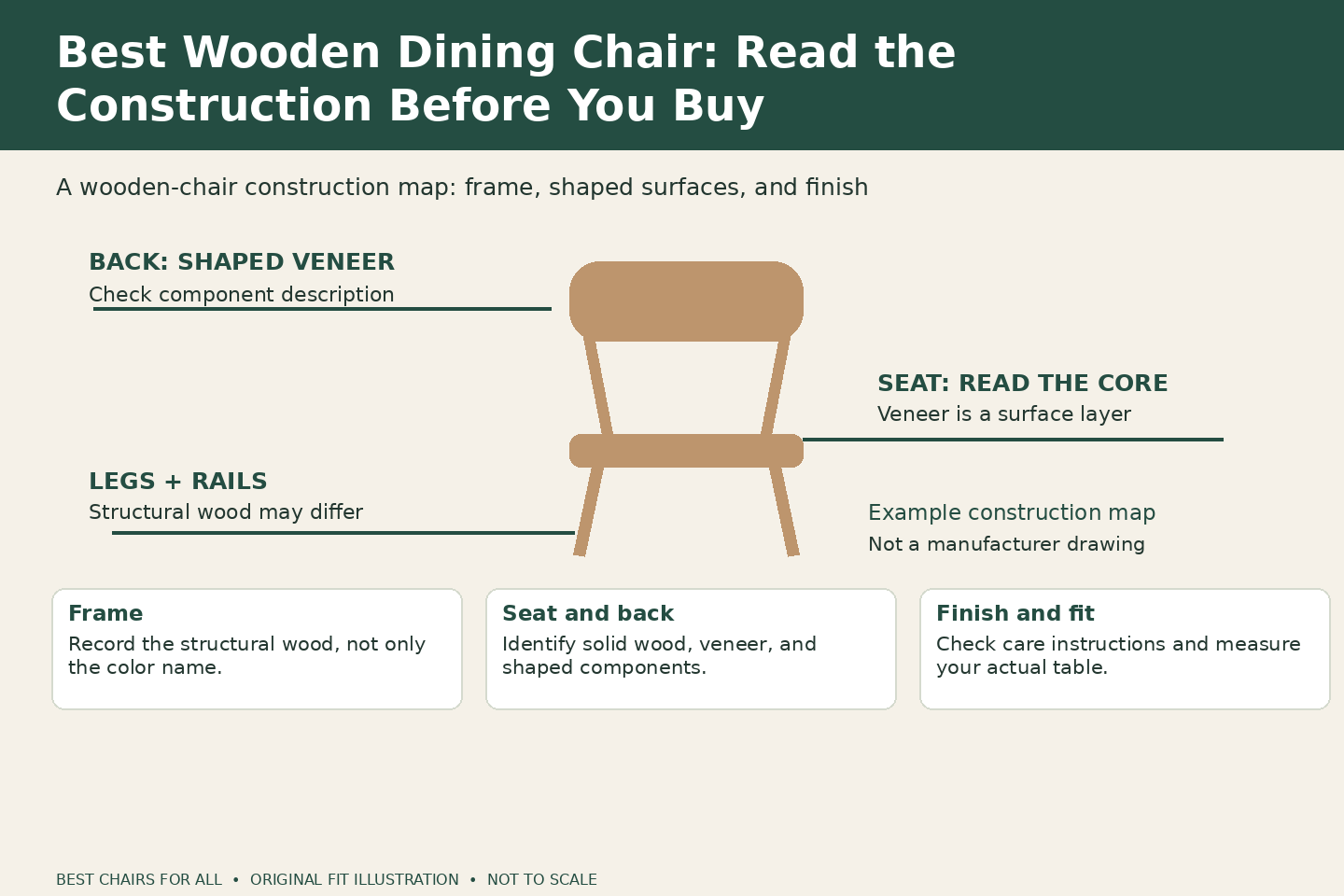
Wooden dining chairs can combine solid wood, bent or layer-glued wood, veneer, engineered panels, metal fasteners, and a protective finish. Those combinations are not automatically evidence of poor quality. A shaped veneered seat and a solid frame do different jobs. What matters is whether the seller describes the components clearly, the chair meets your use requirements, and the finish can be maintained sensibly.
Make a construction map with four lines: legs and rails, seat, back, and finish. Copy the named material for each part from the manufacturer’s page. If the page names a wood tone rather than a species, keep that distinction. A walnut stain can be a color on another wood; a walnut veneer is a thin real-wood surface over a substrate. Neither description means a solid American walnut chair.
Verify the exact variants in the manufacturer references: IKEA LISABO chair, black; IKEA NORDVIKEN chair, white; Article Sede dining chair, Walnut. Specifications were checked November 6, 2026.
1. IKEA LISABO chair, black
Best for: Shaped wood-and-veneer choice.
LISABO suits a dining area where an exposed, shaped seat and back are the priority. Its 15 3/8-inch seat depth is worth comparing with your preferred chair before treating its appearance as a comfort guarantee.
The black version lists solid birch structural parts and layer-glued veneer components. Its 17 3/4-inch seat height keeps it lower than many heavily padded dining chairs.
Product Details
| Brand | IKEA |
|---|---|
| Overall dimensions | 18 1/8 W × 20 1/8 D × 31 1/2 H in |
| Seat height | 17 3/4 in |
| Manufacturer load wording | 243 lb tested |
| Materials | Birch frame; veneer seat and back |
Pros
- Clear component-level material description
- Armless shape simplifies positioning at the table
Cons
- Hard seat feel needs a personal trial
- Black finish may not show the grain effect you want
Buy it for this construction and fit, not an assumed all-solid-ash specification.
2. IKEA NORDVIKEN chair, white
Best for: Traditional ladder-back candidate.
NORDVIKEN is the traditional option for a table that suits a tall ladder back. Its white finish and exposed seat make a different visual statement from a low contemporary back.
The maker lists a 14 1/8-inch seat depth and a 17 3/4-inch seat height. The current US white page is marked last chance, which limits how confidently a future matching purchase can be planned.
Product Details
| Brand | IKEA |
|---|---|
| Overall dimensions | 17 3/8 W × 21 1/4 D × 38 1/4 H in |
| Seat height | 17 3/4 in |
| Manufacturer load wording | 243 lb tested |
| Materials | Solid pine legs and rails; veneered seat |
Pros
- Tall back suits a deliberate traditional scheme
- Published shallow seat dimension is useful for fitting
Cons
- Last-chance status makes availability a concern
- Tall appearance does not establish personal back fit
Check that the required number is actually available before committing to the room scheme.
3. Article Sede dining chair, Walnut
Best for: Compact walnut-veneer option.
The unupholstered Sede is interesting when compact outer dimensions matter. It is a separate product from the Sede leather chair, with different dimensions and sitting height.
Article lists 17 inches overall width, 20.75 inches overall depth, 31.75 inches overall height, an 18.5-inch seat height, and a 15-inch seat depth for the current rendered SKU373F. Materials are rubberwood, walnut veneer, and steel; walnut describes the finish and surface rather than every structural component.
Product Details
| Brand | Article |
|---|---|
| Overall dimensions | 17 W × 20.75 D × 31.75 H in |
| Seat height | 18.5 in |
| Manufacturer load wording | 300 lb tested |
| Materials | Rubberwood, walnut veneer, steel |
Pros
- Narrow documented overall width
- 300-pound manufacturer test figure
Cons
- Small exterior is not proof of a spacious sitting area
- Sold and shipped in pairs with price shown per chair
Compare the actual seat and frame with your largest regular diner before ordering a full set.
Our construction-and-fit worksheet
For each candidate, record overall width, overall depth, seat height, seat depth, and the maker’s exact load wording. Then add the four-part construction map. The result should fit on one sheet. This format prevents a beautifully described finish from pushing the measurements out of view, and prevents a strong-looking frame from becoming a substitute for a documented load figure.
Use your existing table as the filter. Measure the distance from the floor to its lowest relevant apron or rail, not only to the top. Compare that underside height with the chair’s published seat height, then trial with the actual person seated. Two chairs with a similar seat height can still feel different because the seat shape and back angle place the body differently. Arithmetic screens possibilities; it does not replace sitting.
Here is a worked width example. A table opening of 43 inches between the legs gives two 17-inch-wide Sede chairs a combined furniture width of 34 inches. Two 18 1/8-inch LISABO chairs total 36 1/4 inches. The remaining width is different by 2 1/4 inches. That difference may matter in a tight opening, but neither remaining figure proves that two adults have enough elbow room. Try occupied places and inspect the angled legs below.
Check the front edge as carefully as the back. On a hard seat, the shape of that edge can become noticeable during a longer meal. If the seat is too deep for the person to use the back comfortably, adding a cushion under the body is unlikely to solve the underlying depth issue. A back cushion changes available depth but also the intended contact with the backrest. Start with a chair that fits reasonably without improvised fixes.
Three wood constructions, three purchasing priorities
LISABO uses solid birch for structural parts and layered veneer for shaped surfaces. That makes it a logical candidate when a gently shaped seat and back appeal more than traditional rails. Its black finish gives the room a graphic outline, but it can hide the grain you might want from a natural wood chair. Evaluate the exact color in your space rather than assuming every version offers the same visual effect.
NORDVIKEN uses pine legs and rails with a layered, veneered seat. Choose it because you want that tall ladder-back silhouette and its measured seat size works for your diner. Do not choose it because a tall back necessarily supports every torso well. The current white US listing is marked last chance, so availability is an explicit limitation. Confirm that all the chairs you need can be obtained before designing the whole room around it.
Sede’s Walnut version uses rubberwood, walnut veneer, and steel. Its compact published footprint is interesting for a table where adjacent chair frames compete for space. The 15-inch seat depth is also useful information for people who prefer a shallower sitting area. The fact that the outer measurements are compact does not mean every adult will find the seat generous; compare with your own comfortable chair first.
How to inspect a chair on arrival
Open packaging carefully enough to preserve a return option. Check the finish in good light, look for shipping damage at the edges, and identify all the hardware before assembly. Follow the model’s instructions in sequence and use the correct parts. If a hole, rail, or fastener does not line up as intended, contact the seller rather than enlarging holes or forcing the frame into a different shape.
Once assembled, place the chair on a known level surface. Check whether all feet contact the floor and whether joints remain secure in ordinary use. A chair that rocks only in one position on an old floor may have a floor issue; a chair that rocks everywhere needs inspection. Do not casually trim a leg, add a thick permanent shim, or keep tightening until a wooden part splits. Those actions can turn a returnable problem into damage.
Follow the manufacturer’s hardware-maintenance directions. The LISABO and NORDVIKEN pages call for screw checks after the initial settling period and as needed. That is a modest recurring responsibility worth including in the buying decision. A family that wants no assembly or hardware routine should specifically shop for that arrangement, rather than assuming all wooden chairs arrive ready to use forever.
A wood-care plan that respects the finish
Use the care directions for the selected product. The IKEA pages specify a mild soapy solution followed by drying; Article’s Sede page specifies a soft damp cloth and warns against harsh household cleaners. Those are not invitations to saturate the surface. Keep a suitable cloth available and deal with everyday marks promptly using the permitted method.
Place wood furniture thoughtfully around heat and sunlight. Article specifically warns that temperature changes and proximity to heat sources can affect wood and joints. A chair next to a radiator needs more thought than a chair in a temperature-stable part of the room. Do not extend this into a homemade humidity prescription; use the maker’s guidance and ask for advice if the environment is unusual.
Floor protectors are another maintenance item rather than a once-only purchase. Choose an appropriate type for the floor, check that it stays attached, and remove trapped grit. A smooth-moving chair is less likely to be yanked by the top rail. Teach users to move the chair normally instead of rocking on two legs or using it as a step. A dining chair is furniture for sitting, even when the frame looks substantial.
Should you add a seat pad?
A pad can alter the feel of a hard seat and add color, but its fit and attachment matter. Measure the usable seat rather than buying a square cushion solely from the chair’s overall width. Check whether ties or a nonslip backing are compatible with the chair and do not interfere with moving it. Keep the pad from overhanging or shifting during normal entry and exit.
Recheck height and apron space with the pad in place. Suppose an upholstered pad adds noticeable height to a chair that only just clears the table with your thighs underneath. The softer surface may create a worse dining position. Choose a thinner compatible pad, a different chair, or no pad based on a real trial. Do not use loose stacked cushions as a long-term answer to an unsuitable seat height.
Buying a coordinated set
Natural grain and tone variation are normal considerations when ordering wood furniture. Ask to see swatches or a sample finish where available, and view the chair next to the table in daylight and evening lighting. An exact match between two products with the word walnut is not guaranteed. Deliberate contrast can look more coherent than two nearly matching tones that differ in undertone.
Verify whether the price is per chair and whether the model ships only in pairs. Include delivery and any required floor protection in the cost comparison. For the last-chance NORDVIKEN, place availability ahead of a long-term matching plan. If replacement matching is essential, ask the retailer what it can actually supply; no product page can guarantee indefinite production.
LISABO is our first fit trial for an exposed shaped wood chair, NORDVIKEN for a traditional high-back look when stock is available, and Sede for a compact walnut-veneer silhouette. The construction map and table worksheet should decide which one belongs in your home. Solid wood is one useful material description; a well-matched chair is the more useful outcome.
Something unclear or out of date? Send a correction with this article’s title and the detail to check.
Sources, research & corrections policy ↗