As an Amazon Associate, we earn from qualifying purchases. Read our affiliate disclosure. Amazon buttons below search for matching listings; they do not confirm stock, an exact seller, or a current price.
The best ergonomic sewing chair is the one that fits your machine, cabinet, pedal, and body together. A beautiful chair that starts too high can create a new problem at a low domestic sewing table. A low chair can also leave you reaching up to a machine perched above the tabletop. Begin with the actual stitch surface and pedal position, then compare the chair’s adjustment range.
Our shortlist is the Reliable SewErgo 200SE for a lower seat range and a stationary sewing position, the Arrow Hydraulic Sewing Chair for a rolling home sewing room with underseat storage, and the Horn 17090C for a higher, generously sized seat with several adjustments. These are document-based recommendations, not results from hands-on comfort testing. None has been shown here to treat pain or fit every sewer.
The three chairs at a glance
| Model | Published seat height | Main reason to investigate | Main fit question |
|---|---|---|---|
| Reliable SewErgo 200SE | 15–21 inches | Lower starting height; supplied with glides | Does its 20.5-inch-deep seat work for your leg length? |
| Arrow Hydraulic Sewing Chair HCHAIRP | 18–22 inches | Rolling base and storage for small sewing supplies | Does the minimum height suit your cabinet and pedal? |
| Horn 17090C | 20–24 inches | Back and seat adjustments; higher working position | Is its higher minimum and broad cushion appropriate? |
The dimensions above come from the manufacturers’ linked documents below. They describe the listed models, not every chair sold under the same brand. A retailer may show a similar-looking older version or a drafting chair. Request the model number and current specification before comparing offers.
Reliable SewErgo 200SE: investigate first for a lower setup
Reliable’s official 200SE FAQ gives a 15–21-inch seat-height range, a 20.5-by-20.5-inch seat, and a 250-pound maximum. It distinguishes the 200SE’s three adjustment levers and additional cushioning from the simpler 100SE. The stated adjustments cover backrest height, tilt, and seat height. The supplied base uses glides; compatible casters are sold separately.
The low starting point makes this the first model I would investigate when other sewing chairs cannot descend far enough. The large seat still needs an in-person check: a low seat is not automatically a shallow seat. Someone who cannot use the backrest while keeping a comfortable position at the front edge should investigate another configuration rather than assuming the height range solves everything.
For a dedicated machine station, glides offer a different workflow from a rolling chair. Decide whether you usually remain at one machine or move between machines before ordering optional casters. Reliable’s FAQ contains an unrelated iron-rest answer in one block; this guide uses its clearly labeled chair dimensions and adjustments only.
Check matching Reliable SewErgo 200SE sewing chair listings on Amazon (paid link)
Arrow Hydraulic Sewing Chair: a home-room storage option
Arrow’s HCHAIRP product page specifies an 18–22-inch seat range, a five-star swivel base, casters, fabric upholstery, storage beneath the seat, and a three-year warranty. Its current page also says returns are unavailable, which makes advance fit checks especially consequential. Confirm the selected upholstery, exact dimensions, capacity, and seller terms before ordering; this comparison does not substitute a guessed capacity from another Arrow listing.
The storage compartment is useful if the alternative is reaching repeatedly to a drawer across the room. Think bobbins, a seam gauge, or a small notions box rather than turning the chair into the main supply cabinet. Clear the seat before opening its compartment and follow the assembly and use instructions.
I would shortlist Arrow when moving between a machine and nearby work area is central to the room plan. I would not pay extra for a coordinated fabric until confirming that the chair can reach the necessary height and approach the cabinet. Pattern selection is an enjoyable final decision after the fit questions have an answer.
Check matching Arrow hydraulic sewing chair listings on Amazon (paid link)
Horn 17090C: a higher seat with multiple adjustments
Horn’s official 17090C specification lists a 20–24-inch seat height, a 21-inch-wide by 19.5-inch-deep cushion, and a 400-pound maximum recommended weight. Its adjustments include pneumatic height, backrest height and angle, and seat-pan angle. Assembly is required. The stated 35 pounds is package weight, so do not treat it as a verified assembled chair weight.
Horn is the model to investigate when your measured setup calls for a higher seat and the cushion dimensions suit you. Its 20-inch minimum also makes it the easiest of these three to eliminate for a setup that genuinely needs a lower seat. More adjustment controls cannot lower a cylinder beyond its specified range.
Ask a dealer to demonstrate each control on this exact model. Check whether you can reach the controls without abandoning your stable seated position, and record the settings that work. Do not confuse 17090C with Horn’s higher drafting variants: similar branding does not establish identical height ranges.
Check matching Horn 17090C sewing chair listings on Amazon (paid link)
Start with the stitch surface, not the dining-table measurement
A domestic machine placed on a table and the same machine recessed into a cabinet produce different working heights. For example, a hypothetical 29-inch tabletop plus a machine bed three inches above it creates a 32-inch stitch surface. This arithmetic describes the equipment; it does not prescribe a 32-inch chair or establish the correct seat height for any person.
Measure the surface where the fabric travels alongside the needle plate. Record whether an extension table is fitted. Then inspect the space beneath: a cabinet rail, machine lift, drawer, or knee-control mechanism can limit how closely the chair approaches even when the tabletop height looks suitable. A photograph from the side with a tape measure is more useful to a dealer than saying the table is “standard.”
For workplace context, OSHA’s sewing-station guidance treats the chair, table, and treadle as related parts of the station. It identifies poorly matched heights, restricted leg space, and unsuitable pedal placement as contributors to awkward working positions. It favors easily adjusted seating and discusses stationary or locking-wheel arrangements. That guidance supports assessing the entire station; it does not certify any product in this shortlist or replace an individual ergonomic assessment.
Check sewing chair seat height and machine table fit with the machine, work surface, and foot pedal in their normal positions.
At home, use this same equipment-first approach to find what needs changing. If the chair must go beyond its rated range to make the machine usable, investigate the cabinet or table arrangement with the relevant manufacturer. Do not lengthen a lift cylinder, stack improvised seat risers, or dismantle the chair’s pressure mechanism.
Make a stitch-line and pedal map
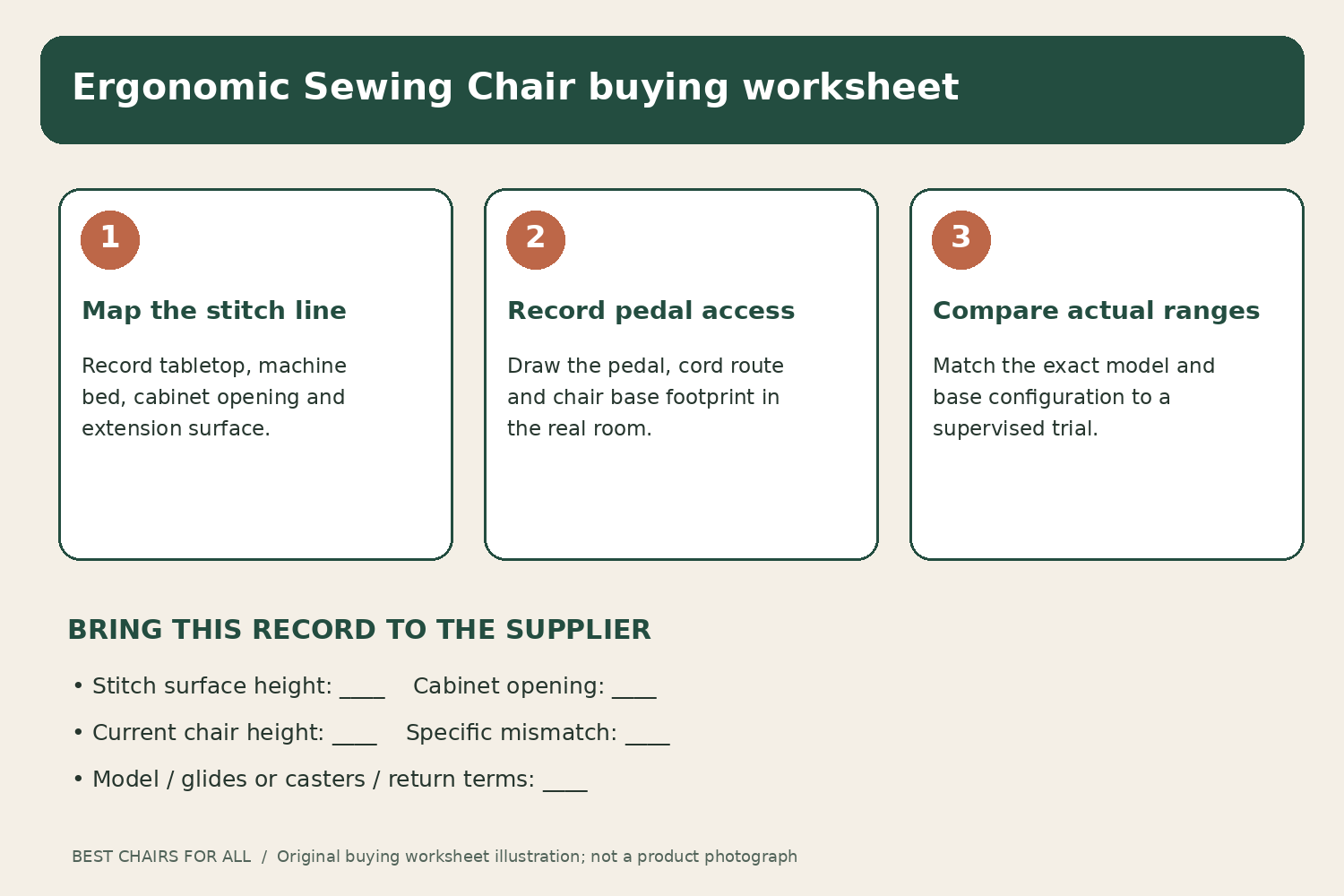
Create one page for each machine station rather than one general room measurement. Write down the machine model, cabinet or table model, tabletop height, actual stitch-surface height, and clear opening beneath the table. Add any extension surface that normally remains attached. These details distinguish a portable machine station from a recessed quilting cabinet.
Next, draw the pedal’s ordinary position relative to the cabinet front and centerline of the machine. Include the pedal cord route and any cabinet crosspiece. This is a record of the existing setup, not an instruction to force your feet into fixed positions. Note where the chair base would travel and whether a caster could approach the cord. Keep alterations to electrical equipment and controls within the machine manufacturer’s instructions.
Finally, record your present chair height and the specific problem you are trying to solve. “Cannot lower enough,” “seat edge feels too far forward,” and “chair drifts while using the pedal” are useful observations. “Needs to be ergonomic” is too broad to compare products. If discomfort persists, or an existing condition affects how you sit or operate the machine, seek an appropriate professional assessment rather than selecting from dimensions alone.
A two-task trial is better than a showroom sit
Bring a short list of ordinary sewing actions to a dealer trial. The first task might represent garment work: viewing a seam allowance, reaching the machine controls, and handling a small piece of fabric. The second might represent managing a larger quilt or longer fabric panel across the table. Use the machine safely and follow the dealer’s trial rules; the purpose is to assess access and support, not to improvise equipment adjustments.
Watch the relationship between the backrest and the work. Can you use the support during the task, or does reaching the needle area pull you away from it? Does the front of the cushion crowd the back of your legs? Does the chair enter the available opening without hitting the cabinet? Record these observations before comparing upholstery or storage.
Repeat the trial with the extension table or cabinet insert you actually use. A chair that feels satisfactory beside an empty desk can produce a different experience when fabric occupies the work surface. Ask about a longer supervised demonstration if a brief sit leaves important questions unresolved. No showroom trial guarantees comfort throughout a long project, so consider the seller’s return terms part of the decision.
Glides, casters, and the room route
Separate seated sewing movement from movement between work areas. Swiveling to collect a nearby tool, rolling to a serger, and standing to press a seam are different actions. Sketch the real route between the machine, cutting surface, and ironing station. A small room can make a rolling chair feel convenient while leaving too little clear space for predictable travel.
For the Reliable, specify whether the quote covers its supplied glides or optional compatible casters. For the Arrow, ask how the supplied casters suit your actual floor and whether approved alternatives exist. For Horn, obtain the current base and caster specification with the dealer quote rather than assuming it matches either other model. Do not fit a random stem size or substitute industrial wheels on appearance alone.
Test the intended floor arrangement before committing. Thick rugs, transitions, loose scraps, and a pedal cord change how a chair moves. A floor mat also has an edge and a footprint to accommodate. The purchasing question is whether the manufacturer-approved base configuration works in the completed room, not whether a chair rolls smoothly across a showroom’s clear floor.
Cushion size, fabric handling, and upkeep
Seat width and depth are separate purchasing measurements. A broad cushion may provide useful room while a deep cushion may make it difficult for another person to use the backrest. Do not rank Horn above Reliable simply by comparing their stated weight limits or cushion dimensions. Capacity establishes one manufacturer limit; it does not establish personal fit, usable cabinet clearance, or comfort.
Think about the materials you actually sew. Loose thread and lint can collect around controls and the base; fabric can drape into the chair’s path. Include a visual inspection of these areas in normal room tidying and follow the chair’s cleaning instructions. Keep pins and blades in suitable containers rather than loose in an underseat compartment. Before using any chair adjustment, make sure hanging fabric is clear of moving components.
For a secondhand chair, request the model label, assembly instructions, and service history. A leaking or sinking lift and damaged controls call for manufacturer or qualified service advice. A lower purchase price does not justify taking apart a hydraulic or pneumatic component. Compare the cost of an approved repair with a chair whose configuration and parts availability can be documented.
Turn the worksheet into an exact order
Ask the seller to put the full model, upholstery, seat range, supplied base components, assembly responsibility, and warranty route on the quote. For Arrow, resolve the return restriction before paying. For Reliable, identify whether optional casters are included or excluded. For Horn, retain the 17090C model number and avoid substituting a higher drafting version without repeating the fit assessment.
The final choice follows your recorded constraints. Investigate Reliable first when the measured chair requirement extends below 18 inches and a stationary station is appropriate. Investigate Arrow when its 18–22-inch range fits and rolling access plus modest storage help the room. Investigate Horn when the higher 20–24-inch range and cushion dimensions suit the setup. Reject any of the three when the trial exposes a mismatch; a complete sewing station matters more than selecting a winner from a list.
Something unclear or out of date? Send a correction with this article’s title and the detail to check.
Sources, research & corrections policy ↗