The best outdoor chair material is the one whose care requirements match the place you will actually leave it. A chair on a covered porch faces a different job from one beside a saltwater pool, even if both are sold as patio furniture. Start with exposure, storage and construction details before choosing a material name.
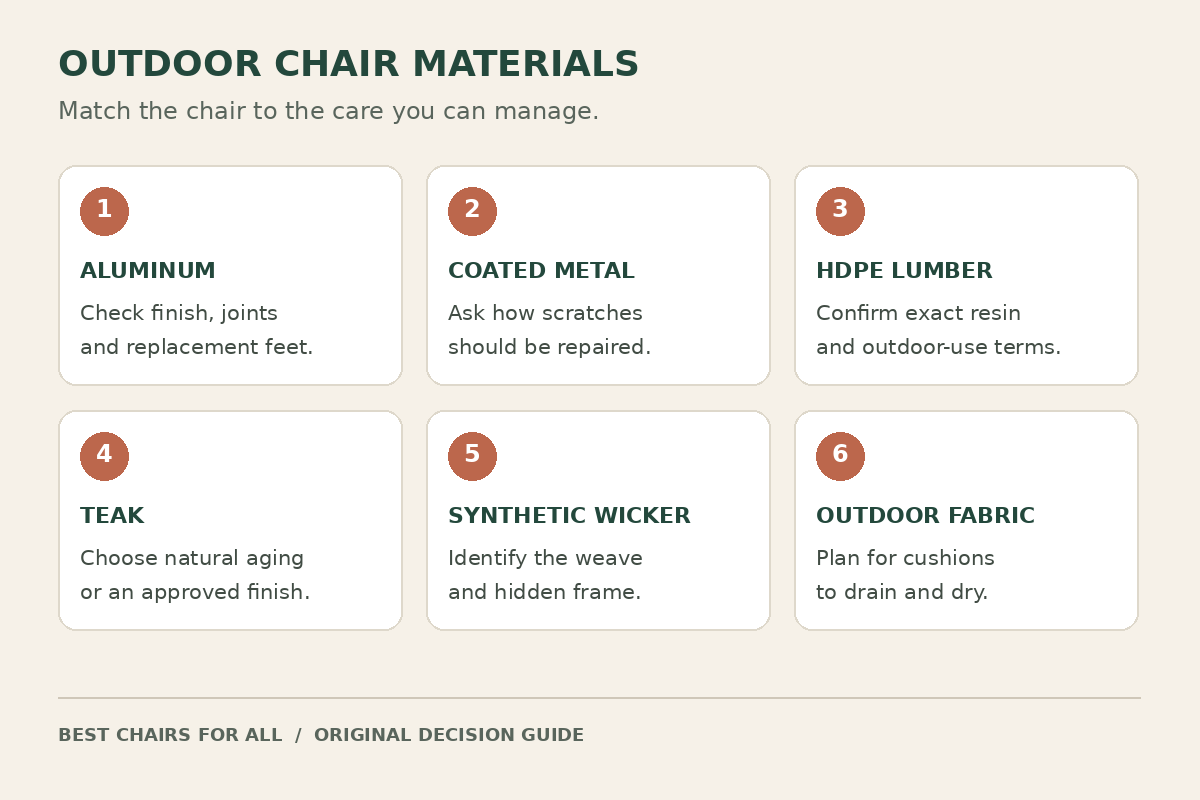
This guide compares the buying implications of aluminum, coated steel or iron, HDPE lumber, teak, synthetic wicker and outdoor fabric. It uses manufacturer material and care documents, followed by our own decision framework. We have not performed weathering tests, and a material comparison cannot predict the lifespan of an individual chair.
Quick answer: choose the problem you can maintain
If carrying chairs indoors is part of your normal routine, prioritize manageable weight and a shape you can move through the door. If chairs will stay outside, prioritize a model explicitly approved for that exposure and obtain the care instructions before ordering. If you want upholstered comfort, make a separate plan for the cushions: a durable frame does not make every filling or seam suitable for continuous rain.
| Your situation | Shortlist to investigate | Decisive question |
|---|---|---|
| You move chairs frequently | Aluminum frames or stackable designs | Can you comfortably carry the actual assembled chair? |
| You want wood appearance without refinishing | HDPE lumber | Is this specific product approved for year-round outdoor use? |
| You enjoy natural wood and accept appearance changes | Teak | Do you prefer natural weathering or a maintained color? |
| You like woven seating | Synthetic wicker over a documented frame | What are both the weave and the hidden frame made from? |
| You want padded lounge seating | Outdoor upholstery with replaceable cushions | Where will wet cushions drain and dry? |
These are starting points for inspection, rather than a ranking of products. A thoughtfully constructed chair in your second-choice material can be a better purchase than an undocumented one in your favorite material.
Read outdoor claims as separate questions
Ask what the seller means by weather resistant. Does the claim concern color, frame corrosion, water penetration, or permission to leave the assembled chair outdoors? Those are different promises. Check whether it covers cushions, moving parts and hardware, rather than assuming the largest headline applies to every component.
Sunbrella itself says its fabric range includes both water-resistant and waterproof products. That makes the exact fabric specification more useful than the brand name alone. Request the upholstery collection or fabric code, together with the furniture maker’s instructions for the finished cushion. Source: Sunbrella water-resistance guidance.
Keep a screenshot or PDF of the product specifications with your receipt. If a retailer changes a listing later, you will still know which model, finish and stated use conditions you purchased. This is particularly useful when several similar-looking generations share a collection name.
Aluminum: investigate coating, joints and carrying weight
Aluminum is worth considering when rearranging furniture is a regular task. KETTLER describes its aluminum patio furniture as lightweight and weather resistant, with a powder-coated finish. That is a useful example of how a manufacturer describes the complete finish system, rather than relying only on the underlying metal. Source: KETTLER aluminum collection.
Inspect the chair from underneath. Look for an identified frame material, smooth joints, replaceable feet and clear instructions for any finish damage. Ask whether the armrests are the same material as the legs; decorative wood inserts or other mixed materials may have a separate care routine. A product can be described as an aluminum chair while still requiring attention to non-aluminum components.
For a small balcony, check storage as carefully as durability. A stackable aluminum chair may solve a practical problem that a bulky lounge model cannot. Measure the stacked height and the narrowest doorway. Ask for the assembled weight rather than the shipping weight, which can include packaging and accessories.
Do not select a lightweight chair as your solution to an exposed windy location without a storage plan. Material alone cannot tell you how an empty chair will behave at your property. Bring furniture into a suitable protected place before severe weather, following local guidance and the product instructions.
Coated steel and iron: judge the protection system
Metal furniture is too broad a category to shop by. A painted steel tube, a specialty coated iron frame and a stainless steel frame do not have interchangeable care instructions. KETTLER, for example, describes a multilayer corrosion barrier on its wrought iron furniture and separately provides cleaning and chip-repair guidance. Source: KETTLER wrought iron care.
Your useful question is what happens after a scrape. Can the manufacturer supply a matching touch-up product? What preparation does it specify? Are replacement feet available if a missing cap allows the frame to drag across paving? Answers are more helpful than a general assurance that the finish is durable.
Check the delivery and storage burden before ordering a set. Moving one chair at a showroom is different from carrying six chairs upstairs at the end of the season. If a model needs two people to move safely, make that part of your decision. Avoid buying a maintenance routine that depends on lifting you cannot comfortably manage.
HDPE lumber: verify the actual resin product
HDPE stands for high-density polyethylene. POLYWOOD says its own lumber contains no wood or natural fibers, has color and protective additives throughout, and requires no painting or waterproofing. Its FAQ permits year-round outdoor use for its products and advises against sanding or painting them. These are brand-specific instructions, not permission to treat every plastic chair the same way. Source: POLYWOOD materials and care FAQ.
When comparing alternatives, ask for the resin type, hardware details, weight rating and assembly instructions. A wood-look surface tells you very little about the structure underneath. Also check whether the chair is solid lumber, a molded shell or a mixed construction. Choose on the documented product, rather than a vague resemblance to another brand.
Think about handling and comfort alongside maintenance. Measure the seat and try the armrest position if possible. A thick, substantial chair can still be the wrong size for its user. If you plan to buy cushions, include their cost and storage needs when comparing an apparently simple unupholstered option.
Teak: decide how you want it to age
KETTLER describes teak as a naturally oily hardwood suitable for outdoor use and explains that exposure produces a silver-gray appearance. Its care page recommends gentle cleaning and warns against pressure washing, abrasive cleaning and casual oil application. Follow the instructions for your own chair, because an existing finish can change the care requirements. Source: KETTLER teak care.
The practical choice is whether an evolving appearance fits your expectations. If you want every chair to retain a uniform showroom color, ask the manufacturer for the exact approved treatment schedule and the expected work. If you welcome a weathered finish, confirm the routine cleaning requirements rather than equating a natural look with no maintenance.
Read the actual instructions about covers. KETTLER’s teak guidance does not recommend covers because it wants the furniture to breathe. That is a good reason to avoid a universal rule that every outdoor chair should be wrapped whenever it rains. Match the cover and storage strategy to the product, including its finish and ventilation requirements.
Synthetic wicker: examine two materials, not one
For woven furniture, identify both the visible weave and its supporting frame. KETTLER’s wicker care page describes polyethylene strands on powder-coated aluminum frames, and distinguishes care of that construction from cushions. It recommends mild cleaning and warns against bleach and abrasive cleaners for its wicker. Source: KETTLER wicker care.
Ask the retailer to photograph the underside if the listing only shows styled room scenes. You want to see how the weave ends are secured and whether the feet can be replaced. Confirm what happens if a strand breaks: is repair available, or is the woven section replaceable? Make these questions part of your comparison before choosing a complex woven design.
Do not transfer synthetic-wicker instructions to a natural woven chair. If an inherited or secondhand chair has an unknown material, identify it before wet cleaning. Ask the original maker where possible. A missing product label is a reason to proceed carefully, rather than an invitation to apply the strongest patio cleaner available.
Outdoor fabric: plan for the complete cushion
The cover, filling, seams and chair frame all contribute to the job of upholstered seating. Request the maker’s instructions for each removable piece. Is the zipper provided for servicing, or is the cover approved for routine removal? Can you purchase the same cushion dimensions later? Those answers matter more than an attractive fabric swatch.
Sunbrella’s upholstery cleaning guide emphasizes prompt spill care, thorough rinsing and air drying, while directing owners to the furniture manufacturer before machine washing removable casings. It also explains that mildew can grow on dirt left on the fabric. Source: Sunbrella upholstery care PDF.
Before buying, walk through your wet-weather routine. Where will cushions go when rain starts? Will the storage space accept their full dimensions without crushing them? Where can they dry before storage? If the only answer is a small sealed box, a padded lounge collection may create more work than you want.
Use this five-question buying worksheet
- Exposure: Write down uncovered rain, direct sun, salt spray, pool splash and seasonal freezing conditions that apply at your location. Ask the seller about each relevant exposure separately.
- Storage: Measure the space you can actually use. Include door openings, stairs and room for cushions to dry before packing.
- Care: Download the exact model’s instructions. List required tasks and supplies, and mark any task you will realistically avoid.
- Repair: Request availability of feet, cushions, slings, fasteners and finish-repair products. Keep any part numbers with your receipt.
- Fit: Confirm the seat dimensions and weight capacity. Sit in the chair when possible, using the kind of cushion you intend to keep on it.
For each finalist, write one reason it fits your home and one reason you might regret buying it. For example: “Easy to stack by the garage; cushions still need their own dry shelf.” That small exercise makes the comparison specific enough to support a real decision.
Compare ownership cost without guessing lifespan
Add the purchase price, delivery, covers if approved, cushions and any known care supplies. Then compare the amount of work involved. Avoid dividing price by a promised number of years unless the terms and evidence genuinely support that forecast. A long warranty may cover only specified defects, and it may have different periods for frame, finish and fabric.
A useful final shortlist contains the model name, material details, measurements, care-document link, replacement-parts contact and total initial cost. If one listing cannot supply those details, ask for them before ordering. The right outdoor chair should make sense as an object you will use and maintain at home, beyond the appeal of its material description.
Something unclear or out of date? Send a correction with this article’s title and the detail to check.
Sources, research & corrections policy ↗