Choose between a beach chair and a camping chair by looking at the surface, sitting position, and journey from your vehicle to your spot. A beach chair often emphasizes lounging and sand-friendly support; a camping chair may emphasize an upright seat, fast folding, or a compact packed shape. Those are tendencies, not definitions. Compare the actual chair rather than trusting the category name.
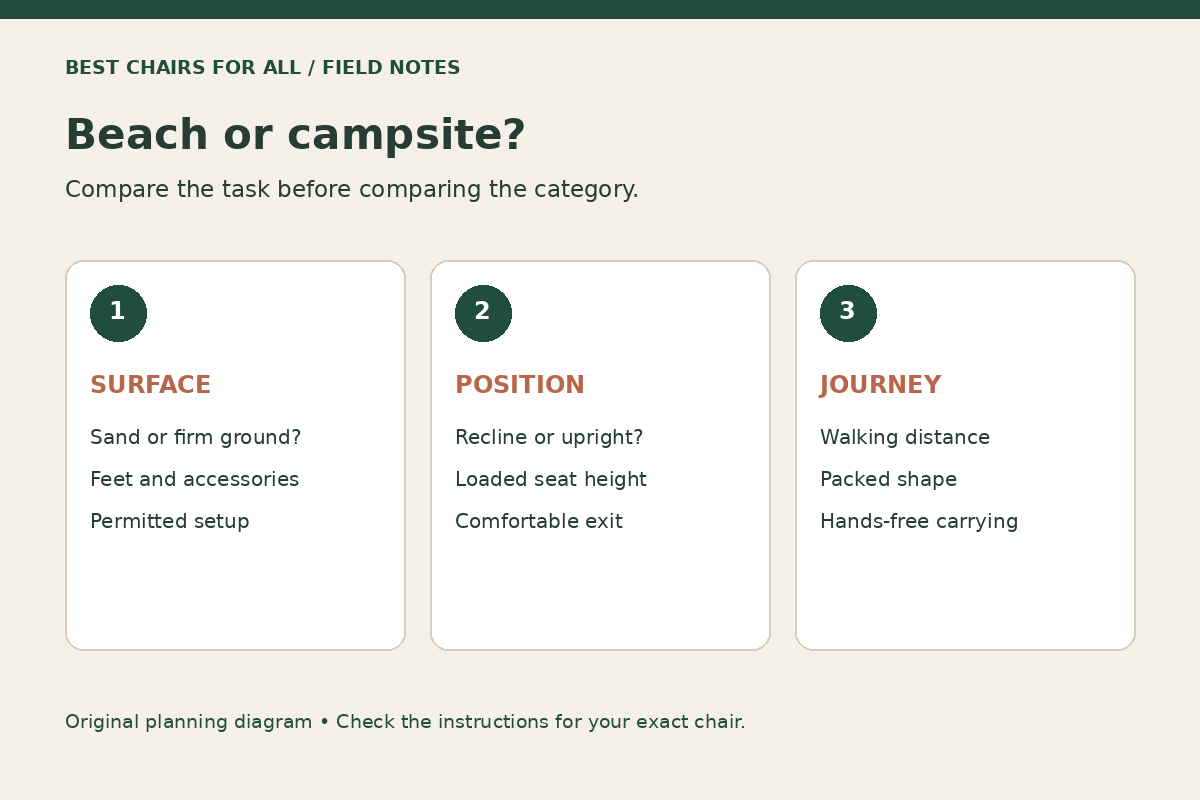
One chair can serve both trips if its fit and instructions work in both places. The useful question is which compromise you will notice every time: a low seat that is hard to leave, feet that sink, a folded frame too awkward for a long walk, or a lounging position that makes eating at a table inconvenient.
Start with your most frequent outing
Write down the next five times you expect to use the chair. Note the surface, walking distance, whether you will eat at a table, and whether you prefer upright reading or reclined resting. This simple list reveals whether you need a beach specialist, a general outdoor chair, or two different seats.
For instance, four campground meals and one annual beach visit point toward an everyday camp chair, provided its approved setup can work on the beach or a separate rental solves that trip. Four long beach afternoons and one backyard gathering suggest a different priority. Designing your purchase around the unusual trip can leave the chair awkward for the routine one.
This is a personal-use exercise rather than a claim that one category is better. If all five outings involve a long walk with other gear, carrying method may matter more than reclining. If the car is beside your pitch, an extra step in folding or a heavier frame may be a reasonable trade for a preferred seat.
Sand changes what the feet need to do
On soft ground, examine how each support contacts the surface. Small feet and loosely packed sand can be an inconvenient combination. A broad support or a manufacturer-approved ground accessory may help, but verify what the exact model is designed to do instead of assuming any beach-branded chair will remain stable everywhere.
The Helinox Beach Chair (re) product page describes a low beach-oriented design with splayed legs and flat feet intended for sand. That is a concrete feature to inspect. It does not mean the same arrangement is ideal for every campsite, every user, or every surface.
Check the spot before loading the chair. Avoid uneven areas where one side sinks differently, and reposition if the supports cannot sit as intended. Do not place an improvised object under one foot merely to imitate level ground. If an accessory is needed, confirm its model compatibility and the setup instructions.
Seat height is a more useful comparison than the label
A very low chair can make reclining feel natural, but it also changes the movement needed to sit and stand. If you prefer your feet close to the sand and do not mind a low position, that may suit you. If you stand often or struggle with low seating, start by comparing a higher seat with supportive geometry.
Not all beach chairs sit low. Costco’s Tommy Bahama Hi-Boy listing specifies a 17-inch seat height. Use that as an example of the category’s range, not a universal target. Compare the current listing and model code before using its dimensions in a purchase decision.
Measure a chair you already find easy to use and record its loaded seat height. Then compare the candidate chair while wearing the footwear you expect to use. A fabric seat can sag under you, so the published edge height and your actual sitting position may differ.
If the chair needs to meet a particular mobility requirement, ask about the actual action you need to perform. A conventional portable leisure chair is not automatically suitable as a transfer aid. Manufacturer confirmation and appropriate professional advice are more useful than a general promise that a chair is good for seniors.
Recline helps lounging but can complicate other tasks
Think through what your hands will be doing. Reclining can suit resting with your face toward the horizon; an upright position may work better for eating, preparing a snack, or using a nearby table. A chair that looks comfortable in a product photo may leave you repeatedly sitting forward to do ordinary tasks.
For an adjustable chair, find out how the positions change, whether the mechanism must be unloaded, and how you know it is engaged. Keep fingers clear of hinges and follow the instructions. If you will adjust it often, try the operation before taking it on a trip where instructions and help are less convenient.
A high back does not guarantee the recline you want, and a low back does not guarantee upright support. Look at the shape of the seat and back together. If you cannot try the chair, choose a seller whose return conditions give you a realistic opportunity to check the fit at home without misrepresenting a used outdoor item as new.
Compare how each chair travels
Two chairs can weigh the same and feel very different to carry. A long bag may hang from one shoulder; a broad folded beach chair may use backpack straps; a compact frame may fit inside an existing bag. Measure the space you will actually use in your trunk, closet, bicycle luggage, or cart.
Make a loaded carrying rehearsal part of your decision. Add the towel, drinks, umbrella, and other items you normally bring. Walk around your home or yard with the chair carried as intended. This does not test its durability, but it does reveal a practical mismatch such as a strap sliding off while your hands are occupied.
Check the packed dimensions with accessories attached. A pillow, ground sheet, or canopy can make a compact chair less convenient than its headline specification suggests. Conversely, a simple folded chair that is bulkier on paper may be easier to handle when it has secure backpack straps and you are walking over sand.
Salt, sand, and rain need a care plan
Portability and outdoor use do not imply permanent weather exposure. After a beach day, remove sand and follow the chair’s freshwater-cleaning instructions. Pay attention to folding joints, feet, and fabric pockets where debris can remain. Dry the chair and bag completely before putting them away.
GCI Outdoor’s care guidance specifically recommends a freshwater wash after beach use and drying before storage. Its support page also distinguishes its portable chairs from weatherproof furniture. A camping chair that fits your beach routine still needs that maintenance time included in the decision.
Look beyond the main frame material. Aluminum can be paired with steel hardware, fabric, and different plastics, each with its own care requirements. A phrase such as rust-resistant frame does not identify every component. Ask about joints, fasteners, replacement feet, and care near saltwater if frequent coastal use is your plan.
Seat fabric changes the practical experience
Compare ventilation, padding, drainage, and how easy the seat is to clean. Mesh can be appealing for an airy feel, while padding may suit your preference for a softer surface. Neither feature alone proves the chair will be comfortable, dry quickly, or tolerate a particular cleaning method.
Check whether the fabric is removable and whether replacements are available. A removable sling can simplify replacement, but it does not necessarily belong in the washing machine. Treat the care label as part of the specification rather than a detail to discover after the first spill.
Consider what you wear. Bare legs, wet swimwear, light hiking pants, and winter layers interact with a seat differently. When trying the chair, notice edges and seams as well as the broad center panel. A short comfort check on the actual candidate gives more useful personal information than another generic claim about premium fabric.
Capacity and usable width still come first
Check the exact model’s capacity before comparing convenience features. Include the seated load you expect and do not share a single-person chair without explicit permission in its instructions. Then measure the usable seat width between supports, rather than the broadest outside measurement across cup holders.
A deep sling may wrap inward under load. An armrest can create pressure even when the outside width seems generous. If you are comparing chairs online, ask the brand for the usable dimensions and a clear model drawing. Keep comfort questions separate from the simple numerical check against the weight limit.
For a lightweight camping design, the Helinox Chair One specification illustrates why you should read dimensions, weight, and capacity together. A product can prioritize compact transport without behaving like a broad, flat-folding beach recliner. Match the design to the job instead of expecting every portable chair to feel alike.
A decision matrix for one-chair buyers
| Your priority | Feature to compare | Question to settle |
|---|---|---|
| Long beach walk | Loaded carrying method and complete weight | Can you carry your other gear too? |
| Soft sand | Support shape and approved accessories | Does the maker approve this setup? |
| Campground meals | Seat height and upright position | Can you use the table comfortably? |
| Frequent standing | Loaded height, arms, seat slope | Can you get up comfortably? |
| Small car or closet | Actual folded dimensions | Does it fit the space you measured? |
| Regular coastal use | Cleaning access and replaceable parts | Can you maintain it after each trip? |
Give your two most frequent activities more weight than occasional wishes. Reject a chair that fails capacity, fit, or permitted use before using this table to compare the remaining candidates. A good compromise should be convenient in your ordinary routine and acceptable in the secondary one.
When owning two different chairs makes sense
Two chairs can be reasonable if your needs conflict strongly: a higher upright seat for meals and a low reclining seat for long beach afternoons, for example. Check storage and transport first. Buying a second chair that cannot fit in your home simply moves the compromise somewhere else.
Before purchasing another, see whether renting, borrowing, or using existing seating solves the rare outing. If you do buy two, label their bags and keep the model-specific accessories with each chair. That makes it easier to avoid attaching the wrong feet or bringing a frame without its correct seat.
Your best choice is the chair whose surface, sitting position, carrying method, and care requirements match your actual trips. Use category names to find options, then use measurements and instructions to make the decision.
Something unclear or out of date? Send a correction with this article’s title and the detail to check.
Sources, research & corrections policy ↗