Measure dining chairs for slipcovers by recording the chair’s seat and back separately, noting its shape, then using the exact cover maker’s measuring diagram. A cover described as universal still has limits. Back height measured from the seat is different from overall chair height measured from the floor, and a stretch range is different from sewing allowance. Keep those distinctions clear before ordering fabric or a ready-made cover.
Choose the cover style before measuring
A fitted model-specific cover, a stretch cover, a loose draped cover, and a seat-only cover do different jobs. A full cover may need to pass over the back and wrap around the seat, while a seat-only cover may require access beneath a removable seat. Decide which construction you are considering so the measurement sheet matches the task.
If the chair has a manufacturer’s replacement-cover system, identify the exact frame first. The IKEA BERGMUND Djuparp cover listing states that it fits the BERGMUND chair frame. That model-specific compatibility is different from a broad dimensional range. A similar silhouette or a matching brand name does not establish that another frame uses the same attachment system.
Do not remove upholstery or a dust cover merely to prepare for a generic slipcover. Some covers fit over the existing surface; others use a designed attachment beneath it. Read the installation instructions before deciding that a seat must be detached. If removal is required, confirm it is appropriate for that exact chair and that you can follow its assembly guidance.
Make a chair identity card
Write the maker, model, number of chairs, and any different versions in the set. Photograph the front, side, back, and underside attachments. Note arms, wings, a curved shell, an open or slatted back, a tapered seat, decorative studs, and a flared top. These shape features can matter even when the main dimensions fall inside a size range.
Measure every distinct chair style. End chairs with arms may need a different cover from the side chairs. Chairs from different production years can also vary. If the set looks identical, check several examples for the dimensions that are close to a cover’s limit. Do not assume one convenient chair represents a mixed secondhand set.
Use a flexible tape for curved surfaces when the cover instructions call for it and a straight measurement when the diagram shows a straight span. Keep the unit consistent. Record the actual readings rather than rounding them into a familiar size. A photograph of the tape can help a seller interpret an unusual contour.
Measure the seat in more than one direction
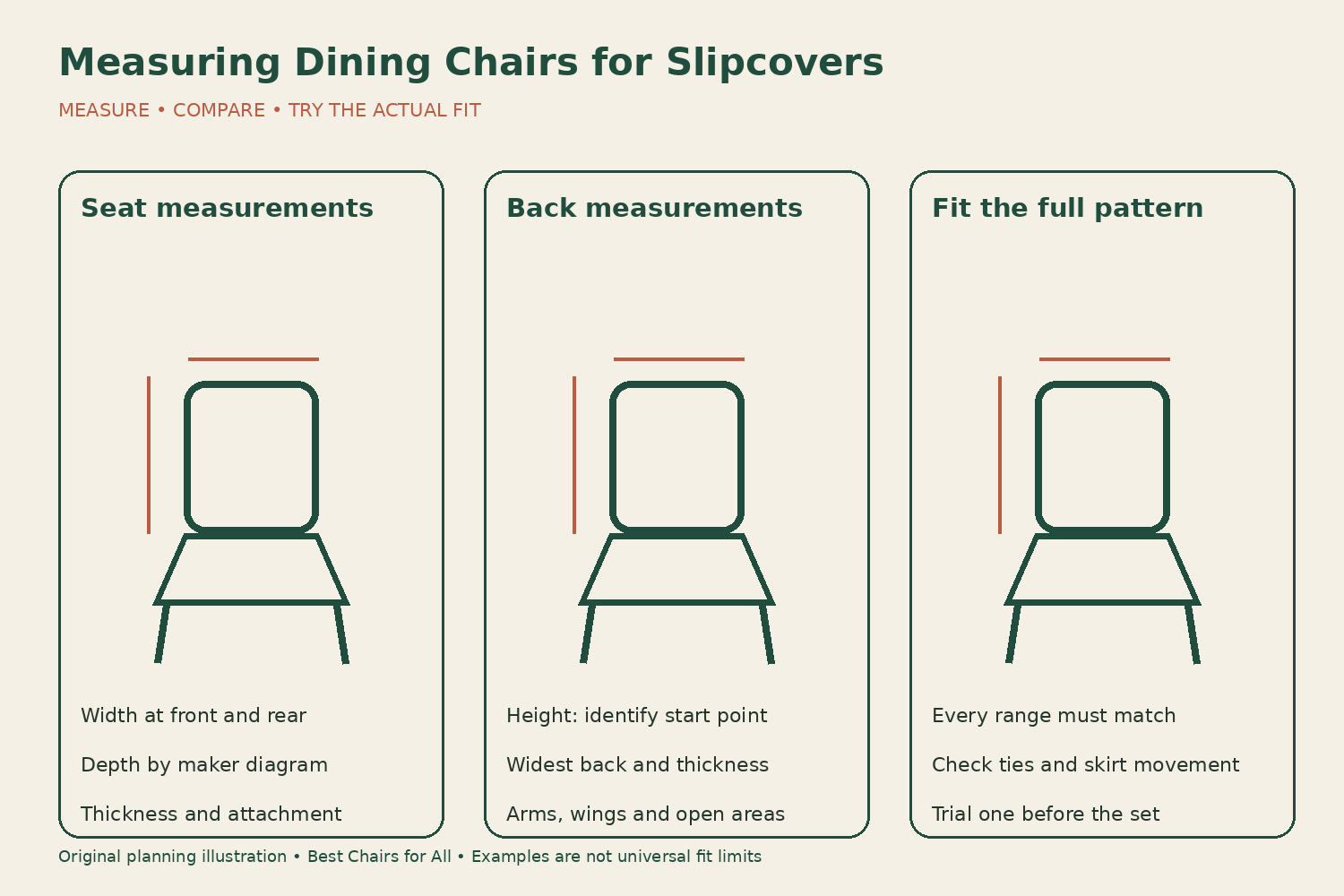
Measure width across the seat at the widest point, then note the width nearer the back if it tapers. Measure depth from the front edge toward the back at the location shown by the cover maker. If the seat curves or has thick upholstery, identify whether the requested dimension follows the surface or runs horizontally. Do not substitute overall chair depth.
Record seat thickness if the cover wraps around it. A thick cushion, a waterfall front edge, or a deep upholstered apron can use more fabric than a thin pad of the same top dimensions. Note whether there is room under the seat for an elastic edge, strap, or other specified attachment. Table clearance does not tell you whether a cover can attach beneath the chair.
For a seat-only cover, inspect the corners and underside before ordering. A cover designed for an easily removable pad may not work on an integrated shell. A pattern intended for a square seat may bunch or stretch differently on a trapezoid. Ask the supplier about the exact shape rather than assuming stretch fabric will compensate for every mismatch.
Measure back height from the stated starting point
One maker may request height from the seat surface to the top of the back. Another may publish a maximum overall chair height from the floor. These are not the same measurement. Draw the starting and ending points on your worksheet and copy the terminology from the product’s diagram so the comparison remains unambiguous.
The FrenchCovers dining-cover guide asks for seat width and depth, back height measured upward from the seat, and width across the back. Its published ranges apply to its cover system, not all covers sold elsewhere. Use the guide’s method only when evaluating the relevant product and confirm unusual shapes with the supplier.
For comparison, the Kohl’s listing for a Sure Fit Pique dining-chair slipcover states product-specific fit dimensions that include a 40–42-inch chair height. Before comparing that figure with a seat-to-back measurement, clarify its measurement basis using the cover’s own diagram or seller guidance. Similar-looking height numbers can describe very different spans.
Record back width and thickness
Measure the back at its widest point and note widths at the top, middle, and near the seat when the shape changes. A back that flares outward may fit through an opening differently from a straight rectangular back. Record thickness where the cover must wrap around, including padded edges or decorative details that project.
An open back creates another issue: there may be no continuous surface to support the cover between rails or slats. A stretch cover may bridge the opening in a way you do not like or were not expecting. The FrenchCovers guide specifically flags shapes and chair types that fall outside its standard approach. Treat such exclusions as functional fit information rather than as a minor styling note.
Arms and wings deserve a clear photograph. A cover sized for an armless straight-back chair should not be ordered for an armed chair merely because its seat width is similar. The cover may have no path around the arms or may obstruct movement. Ask for a compatible pattern or choose a different cover style.
Decide the skirt drop separately
For a skirted cover, measure from the maker’s specified starting point to the intended hem position. Identify whether the pattern refers to the seat edge, the back, or another seam. Keep the hem clear of the floor and of moving components according to the product’s design. A long skirt can change how the chair interacts with a rug or nearby feet.
Check the chair in its normal occupied position and during entry and exit. Fabric should not become trapped beneath a glide, wrap around a footrest, or interfere with a swivel. Do not use a decorative tie to immobilize a mechanism or attach a cover to a structural part that the instructions do not identify as an attachment point.
If a full skirt hides the legs, remember that it also hides floor protectors and some joints from a quick visual check. Plan to lift or remove the cover as needed for ordinary furniture inspection. A cosmetic cover should not conceal an unstable frame or be treated as a repair for damaged upholstery support.
Compare dimensions as a complete set
Suppose a hypothetical cover accepts seat widths from 16 to 19 inches, depths from 16 to 18 inches, and seat-to-back heights from 18 to 22 inches. A chair measuring 18 inches wide and 17 inches deep seems promising, but a 24-inch back fails the stated range. Passing two measurements does not offset failing the third.
Now suppose all three measurements fit, but the chair has arms and a broad winged top. The dimensional pass still does not establish shape compatibility. Ask the maker before ordering. This worked example is a decision method, not a recommendation for any particular size range or a claim that one amount of stretch will suit your chair.
Do not add generic sewing ease to a ready-made cover’s fit range. If the product tells you to measure the chair and select the matching range, use the chair measurement as instructed. Seam allowances, shrinkage allowances, and pattern ease belong to a sewing or custom-making process and must follow that process’s instructions, not an improvised percentage.
Plan for cleaning and refitting
Read the care instructions before buying. Removable does not automatically mean machine washable, and washable does not mean suitable for every temperature or drying method. The BERGMUND Djuparp cover has its own washing and drying restrictions. Those directions should not be transferred to another color, textile, brand, or custom cover without checking.
If laundering is allowed, plan where the cover will dry and how the chair will remain available while it is off. Retain the label and fitting instructions. Refit only as directed, keeping ties, elastic, and attachment points in their intended positions. Do not assume a cover that has changed shape can safely be stretched harder around the frame.
For a custom cover, give the maker your photographs and measurement card and ask which additional dimensions they require. Confirm who is responsible for pattern fit, fabric suitability, and care allowances. A detailed collaboration is more reliable than handing over only the chair’s maximum width and height.
Trial one cover before ordering a set
Where the seller’s terms allow, order or sample a single cover first and test the exact fit. Check alignment, seat movement, back coverage, underside attachment, and any skirt or tie during normal dining. A cover can look smooth while empty and shift when occupied, so evaluate the actual use rather than only the photograph.
Keep the measurements and chosen product code with the order. If a cover fits well, that record makes later replacement easier; if it does not, the same information helps explain the mismatch. The best result comes from a matched measuring method, compatible shape, complete dimension set, and a realistic fitting trial.
For chairs with tapered seats, mark front and rear directly on the measurement sketch. That small detail prevents a maker from reversing the shape when interpreting a list of similar numbers.
Something unclear or out of date? Send a correction with this article’s title and the detail to check.
Sources, research & corrections policy ↗