Choose between HDPE and wood Adirondack chairs by comparing the exact chair’s handling weight, finish routine and sitting geometry. HDPE furniture can remove the need for wood refinishing, but it still needs cleaning and hardware care. Wood offers a different appearance and finish history, with maintenance that depends on species and treatment. Neither material name establishes the comfort, capacity or portability of every chair made from it.
An Adirondack is a style, not a standard set of dimensions. A low reclined version, an upright variation and a folding model can place you differently and occupy different patio space. Compare those practical differences before deciding whether polymer lumber or wood is the better material for your home.
Verify what HDPE means for the actual chair
HDPE stands for high-density polyethylene, but an outdoor chair is a finished product with a particular material formulation and construction. Find the named manufacturer, model, material specification and care instructions. Do not assume that a thin molded plastic chair and a chair assembled from thick polymer lumber behave identically because both are described as plastic.
Check whether the product uses solid lumber-like sections, hollow components or another construction. Ask about the surface texture and color treatment if appearance matters. A molded wood-grain pattern is not a wood coating to sand and stain. The manufacturer’s repair and cleaning guidance should explain what surface treatment, if any, is allowed.
Also identify the fasteners and other components. An HDPE seat can still contain metal hardware, separate glides, hinges or a cushion. The complete system needs care. A claim about resistance to rot in the polymer does not establish that every bolt stays unchanged in salt air or that an attached cushion can remain wet under a cover.
Wood requires a more specific description
Record the species and factory finish together. Natural teak, painted softwood and stained acacia do not share a single care routine. A wood-colored product may also be HDPE, so separate a color name from a material claim. Inspect the product specification rather than relying on a retailer photograph or the word “natural.”
Gloster’s teak guidance describes natural weathering to silver-grey and distinguishes it from using a sealer to retain a brown appearance. That example shows that accepting a changing surface can be an intentional ownership choice. It does not establish a maintenance rule for painted or stained wood Adirondacks.
IKEA’s outdoor furniture guide discusses periodic care and restaining for its pretreated wooden products. When comparing a wooden Adirondack, seek an equally clear instruction for that actual model. If the finish is unknown, the maintenance question remains unresolved even when the species is confidently identified.
Use actual weight, not a material stereotype
A heavy HDPE chair may be less convenient to move daily, but wood is not automatically light. Section sizes, chair dimensions, folding hardware and added features all affect mass. Read the item weight for each exact model and distinguish it from shipping weight. A boxed package includes materials you will not carry around the patio after assembly.
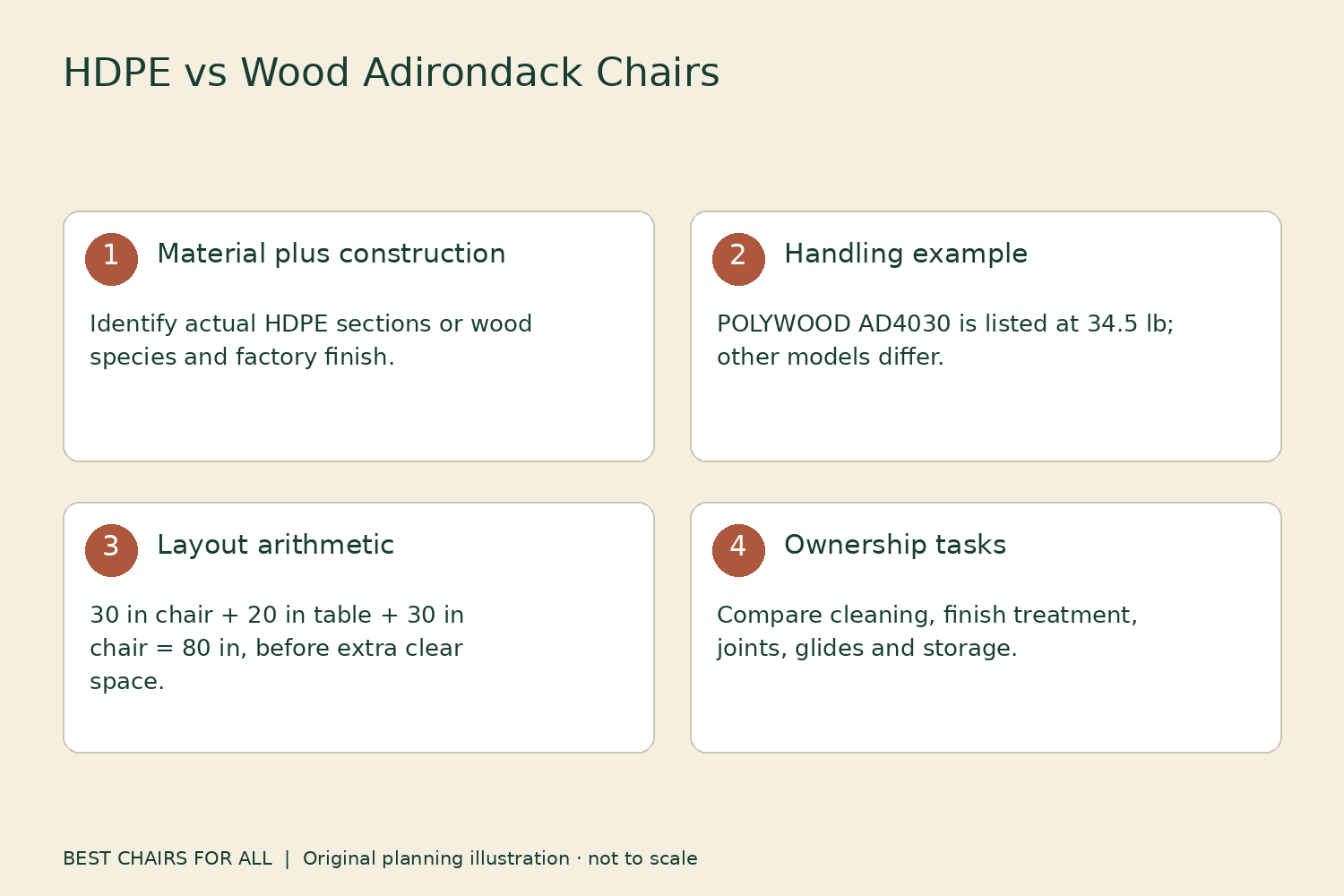
The POLYWOOD Classic Adirondack AD4030 specification lists a chair weight of 34.5 pounds, with overall dimensions of 28.8 inches wide, 35.8 inches deep and 36.3 inches high. This is a documented model example, not a typical weight for all HDPE Adirondacks or a direct comparison with every wooden chair.
Think about where the chair moves. If you bring it through a narrow door before storms, both weight and shape matter. If it remains in a protected garden seating area, frequent lifting may be less important. Try handling a display model using the manufacturer’s permitted lifting points. Do not lift by a back slat or folding part merely because it is convenient to grasp.
Map the move before buying
Measure the route from the delivery point to the patio and from the patio to storage. Include door openings, corners, steps and fixed planters. A chair can fit in its final place while being awkward to get there. A folding feature helps only if you can operate it and the folded package fits the actual storage location.
Use a floor plan or cardboard outline of the assembled width and depth to check placement. Then add occupied legroom and space for standing. A chair footprint is not the complete area a seated person uses. If an ottoman is part of the intended setup, include it separately. Do not compare one chair alone with another chair plus a footrest without recording that difference.
For a simple hypothetical example, two 30-inch-wide chairs separated by a 20-inch table require 80 inches before allowing any outer clear space. The arithmetic is 30 plus 20 plus 30. It is not a recommended clearance or a specification for a particular product. Its purpose is to expose the scale of the arrangement before a large chair arrives.
Compare surface upkeep realistically
Trex Outdoor Furniture’s care page says its Genuine POLYWOOD lumber requires no painting, staining or sealing and gives a soap, water and soft-brush cleaning method. Apply that guidance to the manufacturer’s products. Do not generalize its stronger cleaning permissions to unidentified polymer furniture.
Low maintenance does not mean dirt cannot accumulate between slats or around bolts. Plan to remove debris, rinse as instructed and inspect hardware. A chair beneath trees or near food preparation may require more frequent attention than one on a clean sheltered porch. The amount of actual soil matters more than a marketing phrase about easy care.
For wood, separate cleaning from finish maintenance. Cleaning removes contamination; staining, painting, sealing or other treatment serves a finish-specific purpose. Do not apply a wood oil to HDPE or assume a furniture polish is compatible with either material. Keep the approved product names and preparation instructions in your ownership record so future maintenance is deliberate.
Hardware and joints remain part of the decision
Look for clear assembly instructions, accessible service points and available replacement glides. Follow the specified fastener sequence and avoid overtightening. A chair assembled from strong materials can still have a loose or incorrectly installed connection. Recheck it according to the maker’s guidance rather than assuming the material determines the condition of every joint.
Trex’s care guidance notes that its hardware can show corrosion in salt-air conditions and provides cleaning advice. That is a reminder to inspect metal even when the lumber is synthetic. For a wood chair, inspect the relationship between fasteners, finish and surrounding wood. Loose joints, growing cracks or instability call for an assessment, not merely a fresh coat of finish.
A folding Adirondack adds hinges and locking or retention parts that need their own attention. Try opening and closing the model while it is unoccupied, keeping fingers clear. Confirm how it is carried and stored. Do not select folding hardware solely for a possible future move if it makes the ordinary chair less convenient for your actual routine.
A material-and-task scorecard
| Task or requirement | What to record |
|---|---|
| Daily handling | Actual item weight and permitted lifting points |
| Patio layout | Overall footprint plus occupied movement and ottoman space |
| Appearance over time | Expected color or finish change and acceptable outcome |
| Routine cleaning | Maker-approved method and tools |
| Finish treatment | Required, optional or prohibited for the exact product |
| Hardware | Inspection, cleaning and compatible replacements |
| Seasonal storage | Documented conditions and a real storage position |
Mark essential requirements before comparing candidates. If a chair cannot be moved through the storage route, color selection will not solve that problem. If you cannot undertake the required finish routine, choose a model whose documented maintenance fits your time and workspace. Keep a missing instruction as an open question rather than assigning the material an assumed pass.
Appearance and comfort need separate trials
Request actual samples when texture or color is central to the decision. Polymer wood-grain surfaces and natural grain look different close up. A photograph can flatten that difference. Consider how the finish will look beside your existing table, but do not let a matching color conceal a seat that does not suit you.
Try ordinary sitting, reaching and standing with the intended cushion if the maker offers one. Seat depth, slope, arm height and the front edge matter. A thicker cushion can change usable back height and arm contact. Do not assume a cushion fixes a poorly matched seat or that equal capacity ratings imply equal usable width.
Check the model’s stated load limit directly. Do not infer it from chair weight or slat thickness. Neither HDPE nor wood supplies a category-wide capacity. If a listing does not publish a necessary limit, ask the manufacturer before buying. The answer needs to describe the chair, including the correct size and version, rather than another product from the same collection.
Plan an ordinary season, not an ideal one
Think through the messiest routine event: rain before you remember the cushions, fallen leaves beneath a cover, or chairs moved for mowing. Choose an arrangement that makes cleaning and retrieval manageable. Keep cushions dry under their own instructions and avoid treating a durable frame material as permission to leave upholstery wet for weeks.
Do not buy on an unsupported service-life promise. Both materials can be part of durable furniture, but construction, exposure and care determine the actual outcome. Warranty periods describe particular coverage and exclusions, not a guarantee that every component remains unchanged for that length of time. Read the terms if they matter to your purchase.
Choose HDPE when its documented care, texture and handling suit the setting. Choose wood when its finish and expected change are part of the appearance you want and the maintenance is realistic. Keep the scorecard with the model instructions. It gives you a repeatable reason for the decision and a practical care plan after the chairs reach the patio.
Something unclear or out of date? Send a correction with this article’s title and the detail to check.
Sources, research & corrections policy ↗