Teak and acacia outdoor chairs can both be attractive choices, but the useful comparison is between their actual finish systems and care instructions. Natural-finish teak may be intended to weather silver with cleaning, while a stained acacia chair may need periodic refinishing to maintain its protective surface. Buying by wood name alone can hide that difference in ownership work.
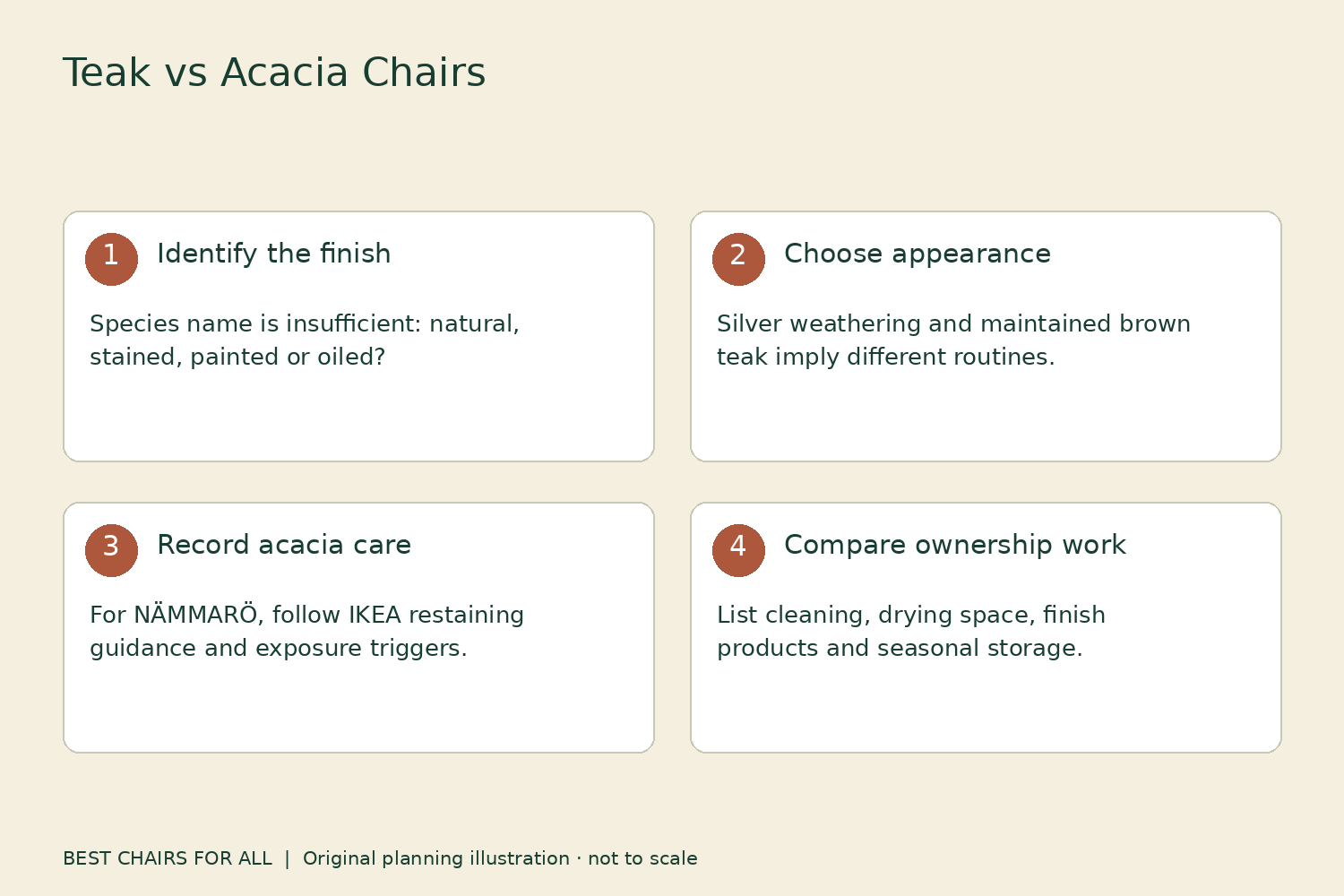
Do not assume every teak chair is unfinished or every acacia chair uses the same stain. Construction, exposure and the manufacturer’s treatment all matter. This comparison uses Gloster’s natural-finish teak guidance and IKEA’s NÄMMARÖ care guide as documented examples. It does not claim that either example represents every product sold under those species names.
Identify what you are buying
Ask whether the wood is solid, veneered or part of a mixed-material chair. Determine which parts are teak or acacia and what finish was applied at the factory. A product color described as “teak” may be a finish name on another material. Read the material specification rather than judging the wood from a warm brown photograph.
Keep the actual care document with your comparison notes. It should identify whether the surface is natural, oiled, stained, painted or otherwise treated, and what products can be applied later. If the seller cannot explain the finish, treat that as an unresolved maintenance question. Adding an arbitrary oil after purchase is not a substitute for knowing what is already on the chair.
Also inspect the rest of the construction. A chair can combine wooden slats with metal hinges, fasteners, synthetic rope and cushions. Those components bring their own limits. A durable wood does not make a poorly protected fitting immune to corrosion or make a cushion suitable for permanent exposure. The complete chair needs an ownership plan.
Understand the natural-teak option
Gloster’s teak material guidance describes natural and buffed teak gradually changing to silver-grey outdoors. It also explains that maintaining the original brown appearance with its sealer creates an ongoing maintenance program. That is a useful buying distinction: accepting weathering and preserving an initial color are different goals.
If you like grey teak, choose a product whose maker supports that approach and be prepared to clean it as instructed. Natural weathering does not mean dirt, sticky spills or structural problems should be ignored. The surface can change color while the chair still requires ordinary inspection of joints, hardware and rough areas.
If you want a consistently brown chair, ask what the manufacturer requires before it begins weathering. Some appearance treatments work best when applied to new clean wood. Do not assume you can postpone the decision for years and later recover the original appearance without additional work. Make the color-maintenance choice while comparing products, not after uneven exposure has established different tones.
Understand the stained-acacia option
IKEA’s NÄMMARÖ care guide recommends regular cleaning, avoiding unnecessary unprotected exposure and periodic restaining. It gives once a year as an example while explaining that frequency depends on wear and exposure. This is a concrete maintenance obligation to include when considering that range.
The guide identifies rain being absorbed rather than forming beads as a useful indication that restaining may be needed on furniture in the open air. Apply that observation to the documented product and its instructions. It does not establish that every coated acacia chair can be assessed in exactly the same way, or that beading proves a chair has no other damage.
Ask which currently supported stain or finish is compatible with the chair’s existing surface. Product availability can change, so do not buy a maintenance product simply because its color name sounds similar. Obtain preparation and drying instructions as well. A finish decision includes the time and space to clean, dry and treat the chair, not just the price of a container.
Avoid using teak oil as a universal solution
A bottle labeled “teak oil” does not establish compatibility with every teak or acacia product. The relevant instruction comes from the chair manufacturer and the specific coating product. Applying oil over an unknown stain may produce uneven results or create a difficult future refinishing problem. More finish is not automatically more protection.
ARB Teak’s natural teak care guidance specifically says not to apply teak oil or other finishing products to its natural teak. That is a different finish policy from brands that offer an optional appearance sealer. Do not replace that guidance with a general statement that all outdoor wood needs annual oiling.
On the acacia side, follow the original finish system rather than importing a teak routine. IKEA’s outdoor furniture maintenance guide describes its wooden furniture as pretreated and recommends restaining where appropriate. The practical lesson is to maintain the documented finish, not to treat one wood’s common marketing advice as universal.
Compare the place where the chairs will live
Write down whether the chairs will sit under a roof, in full weather, beside a pool or near coastal spray. Note nearby trees, cooking areas and irrigation. These details affect cleaning and exposure. A chair on a sheltered porch faces a different routine from the same product left beneath a tree through a wet season.
Look at drainage and contact points. Water can remain between a cushion and slats, in a folded joint or against a chair leg on a damp surface. A cover can reduce direct rain while still requiring ventilation and inspection. Do not design the maintenance plan around the visible upper surfaces only. The underside and lower legs are part of the same chair.
New teak may also interact with adjacent materials. Gloster’s guidance discusses natural oils and pigments washing from new wood and the possibility of staining light fabrics or porous surfaces. Ask the maker how to protect your actual patio and cushions during early exposure. This is especially relevant if the chairs will sit on pale stone or carry light-colored cushions.
A realistic ownership worksheet
| Question | Teak candidate | Acacia candidate |
|---|---|---|
| Exact factory finish | Natural, buffed, coated or other documented finish | Stain, paint, oil or other documented finish |
| Desired appearance | Weathered grey or maintained brown | Maintain current finish or approved alternative |
| Routine cleaning | Copy maker’s permitted method | Copy maker’s permitted method |
| Appearance treatment | Product and reapplication guidance if chosen | Compatible refinishing system and trigger |
| Seasonal storage | Model-specific instructions | Model-specific instructions |
| Other materials | Metal, cushions, glides and connectors | Metal, cushions, glides and connectors |
Give every unresolved entry an action. “Ask about compatible stain before purchase” is useful; “probably any outdoor oil” is not. This worksheet also makes two chairs of the same species comparable. One may offer clear finish support and replaceable glides while another leaves those ownership details uncertain.
Budget for work without inventing a lifespan
Do not compare the woods using an unsupported number of service years. Product construction, environment and maintenance make broad lifespan promises unreliable. Instead, list the actual tasks required by each maker and whether you can perform them. A chair that needs a dry treatment area may be inconvenient in an apartment even if the product itself is well suited to outdoor use.
A simple planning example is four chairs with six wooden surface groups each: seat, back, two arms and two side assemblies. That gives twenty-four groups to clean and inspect, before counting edges and underside details. This is a task-planning device, not a time estimate. It helps reveal why an annual refinishing routine can feel substantial across a larger set.
Decide whether you will do that work yourself or use a service. Obtain actual local estimates if service cost affects the purchase. Do not assume teak requires no work, or that acacia automatically costs more to maintain. The documented finish, acceptable appearance and number of chairs control the comparison more usefully than a species stereotype.
Inspect fit and structure independently
Species selection cannot resolve an uncomfortable seat. Measure seat width, depth, arm spacing and the room available on the patio. Try normal sitting and standing. A beautiful teak chair that crowds a table can be the wrong choice; a well-maintained acacia chair can still be too low or deeply reclined for the intended use.
Look at joinery, fastener access, folding action and replacement-part support. Ask for the exact model’s load limit and assembly instructions. Do not infer capacity from thick-looking slats or heavy weight. If a chair folds, check whether that feature makes winter storage easier and whether the hinges need separate care. Movement and storage may matter more than the difference in finish routines.
For used furniture, establish both species and treatment history where possible. A chair described as teak may already carry an unknown coating. Do not begin sanding or stripping based on a seller’s guess. Photograph labels and condition, then ask the maker or an appropriate professional about a compatible care route. An unknown finish changes the maintenance decision even when the wood identity is correct.
Choose the care routine you can sustain
Natural-finish teak can make sense when the maker supports weathering and you like the resulting appearance. A stained acacia chair can make sense when its finish, exposure limits and periodic care suit your home. Neither choice is improved by ignoring the instructions after purchase.
Compare samples in the intended light if color is important. A product photograph can emphasize a warm tone that looks different in open shade. Request an explanation of how the supplied finish is expected to change, and avoid treating variation in a natural material as proof of inferior construction.
Keep one maintenance note per model with the approved cleaner, finish decision and seasonal storage plan. Revisit it after the first season to see which surfaces receive the most wear. The useful winner is the complete chair whose finish and care requirements fit your expectations, available workspace and actual outdoor setting.
Something unclear or out of date? Send a correction with this article’s title and the detail to check.
Sources, research & corrections policy ↗