As an Amazon Associate, we earn from qualifying purchases. Read our affiliate disclosure.
For long gaming sessions, prioritize a chair that offers several usable positions and adjustments you will actually operate. Our shortlist is RESPAWN FLEXX for a mesh seat with adjustable depth, Herman Miller x Logitech G Embody for a lower seat range and adjustable support platform, and Secretlab TITAN Evo for a padded chair offered in multiple sizes. None makes prolonged uninterrupted sitting a good goal; the purchase should make normal play and breaks easier, not encourage you to ignore the need to move.
We checked official manufacturer information online on November 6, 2026 and compared documented dimensions and adjustments. We have not measured these chairs’ pressure distribution, cooling, or performance over a marathon session. Words such as supportive and breathable describe design intentions unless supported by an actual measurement. This guide therefore focuses on fit, task changes, and a practical first-week adjustment log rather than declaring an untested “eight-hour comfort” winner.
Three different approaches to a long evening
| Chair | Useful long-session feature | Published fit boundary | Main tradeoff |
|---|---|---|---|
| RESPAWN FLEXX | Mesh seat/back and depth slider | 19.3–22.2-inch seat height; 300 lb | Higher minimum height |
| Herman Miller x Logitech G Embody | Adjustable depth and BackFit support | 16–20½-inch seat height; 300 lb | Premium cost; no integrated headrest |
| Secretlab TITAN Evo | Size choices and built-in four-way lumbar | Small, Regular, XL guides differ | Fixed platform depth |
RESPAWN FLEXX: adjustable depth without a padded bucket
The FLEXX specification page gives seat depth as 18.9–20.5 inches, seat width as 20.1 inches, and height as 19.3–22.2 inches. Its stated capacity is 300 pounds. The manufacturer identifies mesh in both the seat and back, adjustable lumbar support, and a pivoting, height-adjustable headrest. At our research date it displayed $299.99 before tax or any applicable delivery costs.
Its seat slider is the most relevant long-session feature because thigh support and back contact need to work together. You can evaluate several depths while keeping your back against the chair, rather than drifting forward simply to get clear of the front edge. That flexibility can be useful across active play, voice chat, and a relaxed controller session. A slider remains bounded by its shortest and longest settings; it is not a guarantee of universal fit.
The mesh surface also gives a different feel from foam and an open path for airflow. It may suit a warm room, but we cannot quantify how much cooler it feels. The frame around a mesh seat is another contact surface to inspect. During a trial, notice the front edge and sides when your feet are supported, rather than comparing only the center of the cushion with a padded alternative.
Pass if the minimum seat height is too high for your lower legs or if you strongly prefer a plush surface. Extra lumbar and headrest adjustments cannot correct the floor relationship. For a buyer whose current chair already sits high, compare the minimums before getting attracted by the mesh description. A successful long-session setup begins with a position you can use comfortably at the start of the evening.
Check matching RESPAWN FLEXX listings on Amazon (paid link) (search results; verify the exact model and seller).
Embody Gaming Chair: a premium alternative with a lower range
The Herman Miller x Logitech G Embody manufacturer listing states a 16–20½-inch seat-height range, adjustable seat depth from 15 to 18 inches, and 300-pound capacity. It describes BackFit adjustment, height- and width-adjustable arms, and a tilt limiter. The chair arrives assembled. The selected configuration showed $1,796.25 during our research, against a displayed regular price of $2,395; colors and promotions require a fresh checkout check.
Its lower height and shorter depth range make it a materially different candidate from FLEXX, rather than simply a more expensive version of the same geometry. A smaller adult who cannot use FLEXX’s minimum height may find Embody’s published range more relevant. That does not establish the chair will fit every short user; compare arm spacing, back shape, and the actual desk relationship in a showroom where possible.
The adjustable support system and flexible sitting platform are the reasons to consider it for a desk shared by work and gaming. Set up the back according to the manufacturer’s guide rather than tightening it until it feels maximally forceful. The chair is intended to accommodate changing seated positions, but its design does not eliminate the need for breaks. We do not repeat the manufacturer’s pressure or cooling claims as our own tested conclusions.
The biggest disadvantages are cost and the lack of a built-in headrest for someone who wants supported head contact during relaxed viewing. Its arms also should not be assumed to offer the same adjustment directions as a four-direction gaming-chair system. A premium price warrants a careful demonstration, a clear understanding of return terms, and a comparison with a less expensive chair that already meets your measurements.
Check matching Herman Miller Logitech G Embody Gaming Chair listings on Amazon (paid link) (search results; verify the exact model and seller).
Secretlab TITAN Evo: choose a size before tuning the support
The TITAN Evo technical document identifies Small, Regular, and XL sizes with different recommended height and weight ranges. Regular targets 170–189 cm and under 100 kg, while XL targets 181–205 cm and 80–180 kg. Features include four-way built-in lumbar adjustment, four-direction arms, and an 85–165-degree backrest recline range. A recommended user range and a maximum load are different entries, so compare both.
TITAN Evo belongs in this comparison for users who prefer a padded surface and want to tune lumbar shape without stacking loose pillows. Different chair sizes are also valuable when the shared “one size fits most” approach misses your body. Choose the frame size first, then the cover and decorative edition. A favorite licensed design is not a reason to accept a seat that is too deep or a back that meets your shoulders in the wrong place.
Its fixed platform depth means selecting the right size matters before the first adjustment. The lumbar mechanism can change contact behind you, but it cannot create the same adjustment as a separate seat slider. Thick add-on cushions would also change seat height, arm relationship, and usable depth. During a trial, evaluate the chair in its intended basic configuration before buying accessories to correct problems you have not yet diagnosed.
We do not quote a universal price for TITAN Evo because the configuration changes the bill. Compare the exact size, material, shipping charge, and any optional accessories with the other candidates. In a long-session purchase, return convenience is a real part of value: a chair that feels wrong after ordinary use needs a practical path back to the seller, even when it has an impressive defect warranty.
Check matching Secretlab TITAN Evo listings on Amazon (paid link) (search results; verify the exact model and seller).
A first-week log that tells you what to change
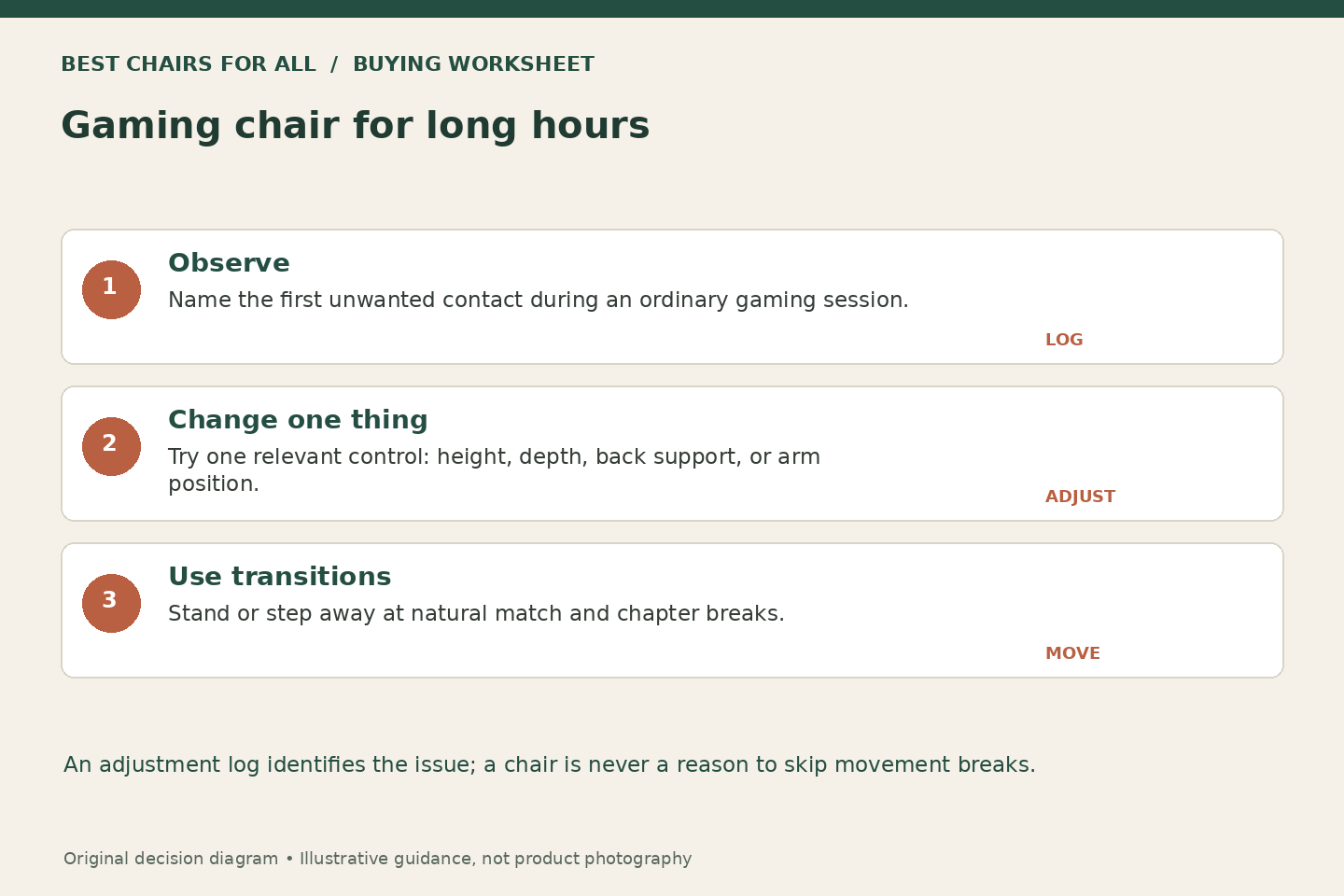
Create a small record with six columns: activity, seat height, depth or back position, arm position, first unwanted contact, and next change to try. The contact entry should be concrete: front edge behind the knees, headrest pushing forward, arm pressing into the elbow, or reaching away from the backrest. Avoid writing a single comfort score, because it hides which relationship needs attention.
Begin with one ordinary session rather than deliberately forcing yourself to remain seated longer. Set the chair for your keyboard and mouse, play normally, and take your usual breaks. At the end, record the first issue you noticed and one adjustment that might address it. Change only that variable next time. If you alter seat height, depth, lumbar shape, and arms together, you cannot tell which change helped or created a new problem.
For a worked example, suppose you keep moving forward to avoid the seat’s front edge. First check depth while keeping the backrest usable. On FLEXX, compare shorter slider settings. On Embody, compare its documented depth adjustment. On TITAN Evo, reconsider whether the chosen size’s fixed geometry is appropriate. Raising lumbar pressure is not a direct way to shorten an overlong seat, and another cushion may simply move the problem elsewhere.
A different entry might say that the chair feels fine in voice chat but your shoulders rise during mouse play. That points toward arm height, desk height, or device reach, rather than immediately toward a new backrest. Lower or reposition the arms within their normal range and check the desk opening. If the desk itself blocks a suitable position, the chair is only one component of the required change.
Plan breaks into the game’s natural transitions
Long sessions contain transitions: loading screens, a completed match, a party member’s pause, or the end of a chapter. Use those moments to stand, change position, or step away instead of waiting until the chair becomes uncomfortable. No chair in this guide provides an evidence-based entitlement to remain motionless for a specific number of hours. A repeatable break habit is more useful than choosing furniture by the longest advertised session length.
Keep essentials where they do not trap you in one posture. A drink on a separate stable surface, a headset stand within easy reach, and cables clear of the exit path make getting up simpler. Avoid routing controller charging leads across the chair’s base or recline movement. These small layout decisions can influence whether you use breaks more than an additional degree of backrest recline ever will.
Material preference should survive an ordinary evening
Compare the surface with your actual clothing and room conditions. A material that feels pleasant for thirty seconds in a cool store may feel different in a warm bedroom. Mesh, fabric, and coated upholstery also need different cleaning methods, so consult the exact model’s care guide. Do not apply a generic leather conditioner to a synthetic cover or assume that a removable-looking cushion can be machine washed.
The seat should remain usable across the tasks you perform, not just in a single carefully posed position. If you switch to a controller, recheck arm spacing and back contact. If you work before gaming, record whether the starting settings suit both tasks or whether a quick adjustment is needed. A simple saved setting can be more useful than leaving a complex chair in yesterday’s uncomfortable configuration.
Which long-session chair deserves your trial?
Try FLEXX when mesh and a deeper adjustable platform match your needs. Try Embody when its lower, shorter adjustment range and support design justify the premium for your body and budget. Try TITAN Evo when a correctly selected padded size suits you and its lumbar and arm controls address specific issues. Judge the first week by the usable positions and identifiable fit improvements you gain, while preserving regular movement and the option to return a mismatch.
Something unclear or out of date? Send a correction with this article’s title and the detail to check.
Sources, research & corrections policy ↗