As an Amazon Associate, we earn from qualifying purchases. Read our affiliate disclosure. Amazon buttons open searches for matching listings; they do not confirm seller, configuration, price or stock.
Choose the chair around the home you actually work in
The best office chair for home is usually an adjustable task chair that fits your legs, clears your desk and can be returned without a furniture-moving ordeal. For a dedicated workroom, Haworth Soji is a strong starting point. For a visible corner of the living room, Branch Ergonomic Chair offers more finish choices with useful adjustments. Steelcase Series 1 deserves a look when a compact chair and a relatively short seat matter more than a tall executive appearance.
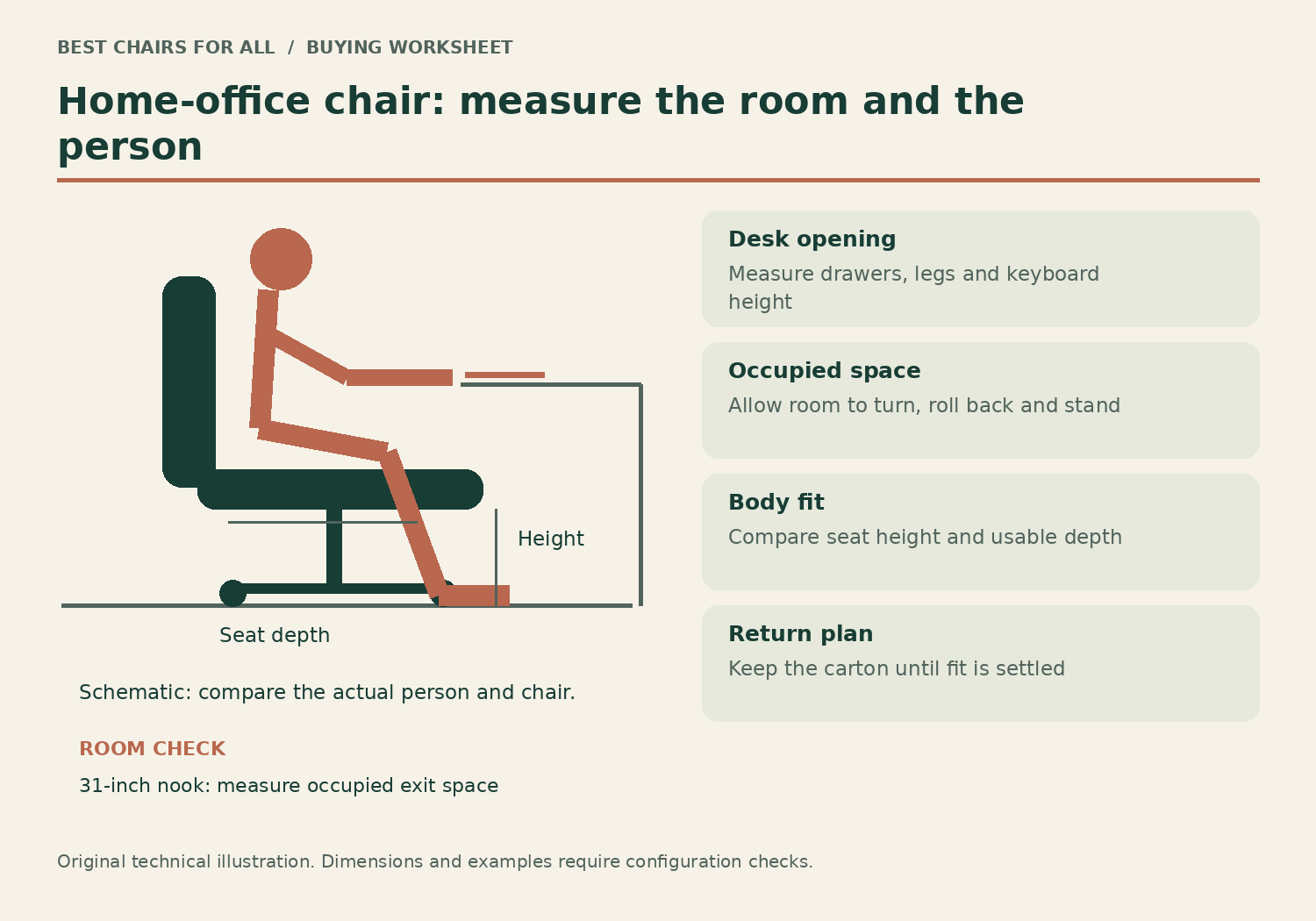
These are research-based selections, not results from a hands-on comfort test. We checked manufacturer documentation and US storefront information on November 6, 2026. Comfort, fabric feel and the exact return experience remain personal checks. There is no universal winner for a five-foot reader using a dining table and a six-foot reader using an adjustable desk. The recommendations below separate those decisions instead of treating every spare corner as the same office.
| Situation | Start with | Check before ordering |
|---|---|---|
| Permanent home desk | Haworth Soji | 16.4-inch minimum standard seat height; chosen arm package |
| Living-room work corner | Branch Ergonomic Chair | 27.6-inch base diameter and minimum seat depth |
| Shallow work nook | Steelcase Series 1 | Functional seat depth and actual caster footprint |
Three home-office chairs worth comparing
Each selection has a different reason to be here. Prices change with textiles, cylinder, arms and seasonal offers, so this is not a hard-budget ranking. A matching Amazon search may show a stool, used chair or different arm package. Compare the manufacturer name and complete model specification before treating any listing as the chair described here.
Model specifications and ordering details were checked against Haworth Soji US specifications, Branch Ergonomic Chair specifications, Steelcase Series 1 US product and options, Steelcase Series 1 dimensional specification guide. These manufacturer documents support the configuration notes in this comparison; retrieved November 6, 2026.
1. Haworth Soji
Best for: a dedicated home workstation.
Soji earns its place through a useful combination of seat-depth adjustment, a padded seat and an uncomplicated task-chair format. Its US store lists a 16.4–21-inch seat height and 16.25–18.75-inch seat depth, making the exact size easier to compare with your current seat.
The important purchase detail is the configuration. Haworth lists optional lumbar support, optional forward tilt and different arm choices. A photograph alone does not establish which are in your cart. Choose the features you can explain a use for, then check how the arm pads and backrest feel in your everyday typing position.
Product Details
| Brand | Haworth |
|---|---|
| Seat height | 16.4–21 inches, standard US cylinder |
| Seat depth | 16.25–18.75 inches |
| Seat width | 20 inches |
| Capacity | 350 lb |
Pros
- Published sliding-seat range
- 20-inch seat width
Cons
- Standard cylinder may still be too high for some readers
- Options change the specification and cost
Choose this when a permanent desk is worth setting up carefully, and confirm all options against the official Soji link below.
2. Branch Ergonomic Chair
Best for: a visible home work corner.
The Branch Ergonomic Chair balances a mesh back and foam seat with removable three-way adjustable arms. It is appealing for a living-room desk where a bulky executive chair would dominate, provided its actual measurements fit the user.
Branch lists a 17–21-inch seat height, 275-pound capacity and 27.6-inch base diameter. The seat-depth label is 18–22 inches; do not assume that is directly comparable to another brand's functional-depth measurement. Shorter-legged readers should verify usable depth with Branch or a trial rather than relying on its broad recommended height range.
Product Details
| Brand | Branch |
|---|---|
| Seat height | 17–21 inches |
| Seat depth (manufacturer label) | 18–22 inches |
| Capacity | 275 lb |
| Arms | 3D adjustable and removable |
Pros
- Removable arms offer layout flexibility
- Seat-depth and lumbar-height adjustments
Cons
- Minimum usable depth needs careful checking
- 275-pound capacity excludes some buyers
A sensible shortlist choice when finish and room integration matter alongside adjustment, with a return plan if the seat feels too deep.
3. Steelcase Series 1
Best for: a compact adjustable task setup.
Series 1 is the most interesting candidate here for readers who want a relatively short functional seat. The specification table lists 15.5–17.75 inches of functional depth, while its diagram rounds the upper setting to 18 inches; treat this as approximately 15.5–18 inches and confirm the ordered configuration. Seat width is listed at 19.5 inches, with multiple cylinder choices.
The regular chair is distinct from the stool. Standard height is listed at 16.5–21.5 inches in the US guide; a low cylinder is an ordering option rather than a promise about every ready-to-ship listing. Four-way arms and an adjustable lumbar support give this smaller-looking chair more fitting flexibility than a simple bedroom desk chair.
Product Details
| Brand | Steelcase |
|---|---|
| Standard seat height | 16.5–21.5 inches |
| Functional seat depth | 15.5–17.75 inches |
| Seat width | 19.5 inches |
| Arms | 4D configuration available |
Pros
- Short functional-depth setting
- Cylinder and caster options
Cons
- Automatic recline feel needs a personal trial
- Low cylinder must be specified correctly
Choose it for measured fit and convenient resetting, while verifying the exact arms, cylinder and back style being sold.
The home-office measurement sheet
Measure the desk first, because a chair cannot lower a fixed keyboard surface. Record the height from the floor to the top of the keys, the underside of any drawer, and the narrowest clear width between legs. A desk can be wide across its top but have a surprisingly small opening underneath. Measure that opening where the chair base and arms will actually enter, including any crossbar.
Next, measure your comfortable seated height in work shoes using a firm existing chair. Your whole feet should have support without the front edge pressing into the backs of your knees. Record the current seat height and the distance from your supported back to the crease behind the knee. These are screening measurements, not a medical prescription or a guarantee that the new chair will feel identical under load.
For example, suppose a reader works at a 29-inch table with a 26-inch drawer underside. Their comfortable seat height is approximately 16.5 inches. Raising the chair to put relaxed forearms at the keyboard may leave their feet unsupported. A stable footrest can address the feet, but it cannot create thigh clearance under that drawer. This reader should investigate the table and keyboard position before assuming a taller, more expensive chair solves everything.
Finally draw the chair’s maximum footprint on paper or mark it temporarily on the floor with removable tape approved for that surface. The Branch chair’s listed 25-inch width is not the same measurement as its 27.6-inch base diameter. Leave room to turn, roll back and stand. A base that fits beneath a desk while parked can still obstruct a bedroom route during actual use.
A worked room-fit comparison
Imagine a nook with 31 inches between a bookcase and a cabinet, a shallow desktop, and a door that swings across the space behind the chair. The three chairs may all look acceptable in a cropped product photo. In practice, the useful question is whether the user can sit down, rotate and leave the desk with the door open. Measure the occupied workspace, rather than only the empty desk opening.
Series 1 is attractive here because its published functional seat depth starts at 15.5 inches. That does not mean the whole chair is only 15.5 inches deep: functional depth describes the sitting area, while the base and back extend farther. Soji lists an overall depth of 27 inches and width of 28 inches. Those figures help with screening, but a reclined back needs additional room and should be checked against the wall.
If two people use the nook, repeat the body measurements for both. An adjustment that covers one person at its extreme setting may leave the other with no comfortable position. Keep a short card in the drawer recording each person’s seat height reference, depth position and arm height. A shared chair becomes easier to use when resetting it takes a minute rather than a search through the manual.
What matters in a living room or bedroom
Residential use adds constraints that office buying guides often ignore. A chair must move across the actual floor, avoid blocking storage and suit the room when work is finished. Fabric color can matter, especially if the seat will sit beside a sofa, but the more consequential measurements are still seat depth, lowest usable height and whether the arms retract far enough to approach the keyboard.
A mesh back permits airflow around the back; it does not promise that every part of the chair will stay cool. Branch and Soji pair mesh backs with cushioned seats. If you dislike foam beneath your thighs, try an all-mesh alternative in person before ordering from a photograph. If you dislike a firm frame at the seat edges, a suspended mesh seat may be the wrong trade even if it looks lighter in the room.
Work shoes and house slippers can produce different fit results. Set up the chair in what you normally wear at the desk, including no shoes if that is your habit. Avoid using a rolling household object as a footrest. Where floor protection is needed, check both chair caster options and the flooring manufacturer’s advice for the particular finish. A clean compatible rolling surface matters more than an unqualified scratch-proof label.
Use the return period as an organized fitting period
Before checkout, save the return policy for the seller and configuration you actually chose. Determine when the window starts, who pays return shipping, whether assembled chairs are accepted, and whether a custom textile is excluded. An attractive manufacturer policy does not automatically apply to a marketplace reseller. Keep the carton and packing materials until the decision is settled, and photograph the label and parts on arrival.
On the first day, adjust the seat to the keyboard, support your feet, and move the seat depth so your back can reach the backrest without knee contact. Then set arm pads to meet relaxed forearms. Test ordinary tasks: typing, mousing, reading a paper document and taking a video call. Do not turn every control at once; write down the starting position and change one variable when something feels wrong.
Over the following days, note where the chair works and where it interferes. Does the right arm hit the desk before the mouse is comfortably close? Does the front edge become noticeable while reading? Does the back lose contact when you lean to see a laptop screen? These observations help distinguish a seat-fit problem from a monitor or desk-layout problem. They are more useful than asking whether the chair feels luxurious for the first thirty seconds.
Questions that settle the purchase
Do you need a headrest? Usually it is a separate decision about reclined reading or calls. It should not push your head forward during typing. Branch offers a compatible optional headrest and Series 1 has a field-installable option; verify the matching version. Soji is a task-chair choice here rather than a headrest recommendation. An add-on cannot repair an unsuitable seat or keyboard height.
Is a dining chair enough for occasional use? It can be workable for a brief task if its dimensions happen to match the person and desk, but it offers fewer ways to adapt. For regular home working, adjustable height and depth make the purchase less dependent on luck. The OSHA chair guide emphasizes fitting the whole workstation, including feet, arm support and backrest contact.
Which of these should you choose first? Start with Soji for a broad everyday adjustment set, Series 1 when a shorter functional seat is valuable, and Branch when its room-friendly finish options and removable arms match your needs. Eliminate any chair that fails your measurements before comparing appearance. The right home chair should support the workday and leave the room usable afterward.
Something unclear or out of date? Send a correction with this article’s title and the detail to check.
Sources, research & corrections policy ↗